Waste is a visible symptom of deeper systemic issues. Across Aotearoa New Zealand, organisations, councils, iwi and communities are striving to move beyond the linear logic of take–make–dispose toward circular ways of organising production and consumption, mindful of care for both land and people. However, intentionality alone provides no guarantee of systems transformation. In reality, decision makers still face a host of practical barriers – e.g., energy limitations, infrastructure gaps, supermarket led packaging systems, and policy settings attuned to linearity – as well as conceptual roadblocks that favour status quo over the often complex, relational work required to make circularity real.
Our report is an attempt to shift that reality. We explore where and why circularity is hindered, what types of social and technical innovation are currently emerging, and how ‘better’ measurement can help us identify ‘better’ investments. We begin by situating circular economy as more than just a design toolkit or a new label for recycling. At its strongest, circularity calls for integrated, place-based systems in which resources are reduced, repaired, reused, and only then remanufactured or safely returned to nature.
In Aotearoa, such aspirations intersect with Māori economic thinking that is regenerative, relational and inherently circular – spirality: cycles that return and evolve rather than simply close. Recognising this heritage challenges narrow interpretations of circular economy and highlights reciprocity, kaitiakitanga and rangatiratanga as foundational for transition.
In this industry insights report, we summarise insights from our 2025 Measuring Circular Economies Symposium, featuring keynote speaker Dr Jay Whitehead (Matatihi), and keynote respondents Assoc Prof Stephen Healy (Western Sydney University) and Professor Abby Mellick Lopes (UTS). The report finds that many of the challenges of measuring circular economies come from uncertainty about what to measure and how to measure it. The report was funded by Massey University and was part of a one year project carried out by a team including Kelly Dombroski, Nitha Palakshappa, Derrylea Hardy, Sita Venkateswar, Georgia McLellan and Gradon Diprose.
We hope to use the insights from this report to inform future work in the area of circular economy return on investment tool design.
The most recent installment in the podcast series with Tara Brabazon is now available. This was super fun! We discuss the paper I co-wrote with colleagues, published 2023, entitled “Cultivating commoners: Infrastructures and subjectivities for a postcapitalist counter-city”. We discuss the collaboration with Christchurch urban farm Cultivate, the idea of subjectivity and how being outdoors might help shift subjectivities.
Cite the article as: Dombroski, K., Conradson, D., Diprose, G., Healy, S., & Yates, A. (2023). Cultivating commoners: Infrastructures and subjectivities for a postcapitalist counter-city. Cities, 143, 104635. https://doi.org/10.1016/j.cities.2023.104635
Our Marsden team (Reduce, Reuse, Repair) published a new report about how to move up the waste hierarchy. It was authored by Gradon Diprose (Bioeconomy Science Institute) and Dorte Wray (Zero Waste Aotearoa).
Guest post by Dr Gradon Diprose, Bioeconomy Science Institute.
Why we wrote this report
We know there are huge problems with waste. For example, New Zealand produces a lot of waste compared to other OECD countries, and our central and local government’s focus is on managing waste, not preventing it. While the waste hierarchy has been around for years it is still not reflected in many government’s operational policies or actual investment. This is partly because the waste hierarchy conflicts with many countries GDP growth-oriented economic goals, and the vested interests of powerful industries. The key question for us is how to encourage social and political shifts towards waste prevention given these challenges.
For this report, we researched what collective practices help communities and businesses to prevent waste and build the wider social and political support for waste prevention more broadly. We interviewed people from businesses, local government, and non-governmental organisations and civil society groups who work on waste prevention and supplemented this with a literature review. We asked participants what had practically helped them, their businesses, and wider communities shift from waste management to waste prevention. We also asked participants how they did this. For example, what kinds of language they use, and what they invest in and prioritise.
What is in the report (and isn’t)
The report identifies four interconnected collective practices that help build the social and political pressure to make waste prevention a priority.
The report is not about how to manage waste through individual behaviour change. For example, how to recycle better, how to address problem waste streams, or the best waste disposal options.
What we learned through our research
Our participants and the research literature highlight that governments need to set new rules like mandatory product stewardship, extended producer responsibility and right to repair to shift economic systems towards waste prevention. The four interconnected collective practices that help build the social and political pressure for this new legislation are:
Supporting collectives and networks
Investing in place-based initiatives
Using data to demonstrate impact
Using language strategically to frame change
Who is this report for?
We wrote this report for those people and organisations already taking action on waste prevention, and for those who are concerned and want to take action. We also wrote it for funders, public servants and elected officials who might want to support waste prevention and wider systems change but don’t know where to start. The report helps to show what is already in motion and what is working.
What’s next?
We will be running cooperative inquiry groups (a kind of action research approach using focus groups) with New Zealanders who are interested in waste prevention. These groups will explore people’s everyday practical actions and deeper meanings and emotions associated with waste prevention. Shifting towards waste prevention will require significant and deep social changes. These cooperative enquiry groups will explore some of these shifts. Such as how people come to desire consuming less (reduce), how the negotiate their relationships with others in the process.
Early on Saturday morning, before the family awoke, I typed the last few paragraphs… yes! A new book is en route! It’s working title is Postcapitalist Economies of Care.
The book argues that care is a powerful force that can be invested in transforming our economies, developing a methodology for inventorying care surplus flows — from generation, to appropriation and distribution. It asks how different patterns of care surplus flow create space for different kinds of transformations, including space for different kinds of actors in transformative work. Care can be part of maintaining capitalism, we know that, but it also contributes to survivance of noncapitalist ways of being, and can even be collectivised for more widespread transformation.
Of course, I subscribe to the ‘shitty first draft’ school of writing, which means that there is editing to do now before it is ready for widespread sharing. But since I have worked with a book mentor all the way through, I have had regular light edits, conversations about direction, and feedback to guide me. I feel like it is in pretty good shape. Maybe not even a ‘shitty’ first draft, but a reasonably readable first draft?
One can always hope.
But what comes next? Well, I have put together an ambitious edit schedule, hoping to get the book manuscript and proposal off to an appropriate publisher before the end of the year. I am also ‘road testing’ chapters through presentations over the coming months at a few conferences and in the Political Economy Research Centre’s seminar series on hope. This helps me see whether the ideas are landing, and what adjustments might be needed for different audiences.
As I edit the chapters, I will also have the proposal open and be editing the proposal to fit what I actually ended up doing in the chapters (slightly different from what I initially proposed). For this book, I have decided to submit proposal and manuscript together. Usually, I sign a contract before I begin serious work on the book, but this time, I was not yet sure exactly where I wanted to publish. So I decided to write the book I want to write, with five or six possibly publishers in mind, then reassess when I got through the first draft.
What do I do when I am editing the first draft? For me, it’s usually about reducing length and increasing clarity, as well as keeping an eye on transitions and coherence. Here’s my plan for this set of revisions:
read the introduction and conclusion against each other and edit to increase coherence.
Rewrite the rationale section of the proposal.
Work my way backwards through the chapters. I like to do it backwards, so I can make sure the preceding chapter sets up what is required in the argument for the following chapter to work. When I do it forwards, I am mainly focused on flow. For argument, I feel like it works better to go backwards!
Rewrite chapter summaries in proposal as I go.
Print out the whole thing and read through for copy and line edit.
Enter changes and update proposal.
Find a couple of extra pre-readers.
Edit according to their feedback
Start submitting to publishers.
Watch this space for links to talks, pre-reading opportunities and general reflection on the book’s argument and progress.
Once again, I had the great privilege of being able to discuss a piece of my work with Professor Tara Brabazon on this bespoke podcast leading up to my book Postcapitalist Economies of Care!
Cite the paper: Dombroski, K. 2024. “Communities of Care in the Nitty-Gritty of Commons-Work.” Azimuth International Journal of Philosophy XII (24): 24-48.
Recently I was able to talk to Tara Brabazon about my work on transitional commoning. We discuss a paper I wrote with Gradon Diprose and Irene Boles, which asks the question “can the commons be temporary?” In effect, what might be sustained when the temporary commons is transitioned into something else?
It was an immense privilege to record this first podcast in an ongoing collaboration with Professor Tara Brabazon in the build up to my new book on postcapitalist economies of care. This first episode revisits a book chapter from 2015, where I first began to engage with the concepts of life’s work, care, social reproduction and postcapitalist possibilities. Check it out here, on Youtube, or wherever you get your podcasts.
By Dr Lila Laird, Postdoctoral Researcher, Massey University
What is the project about?
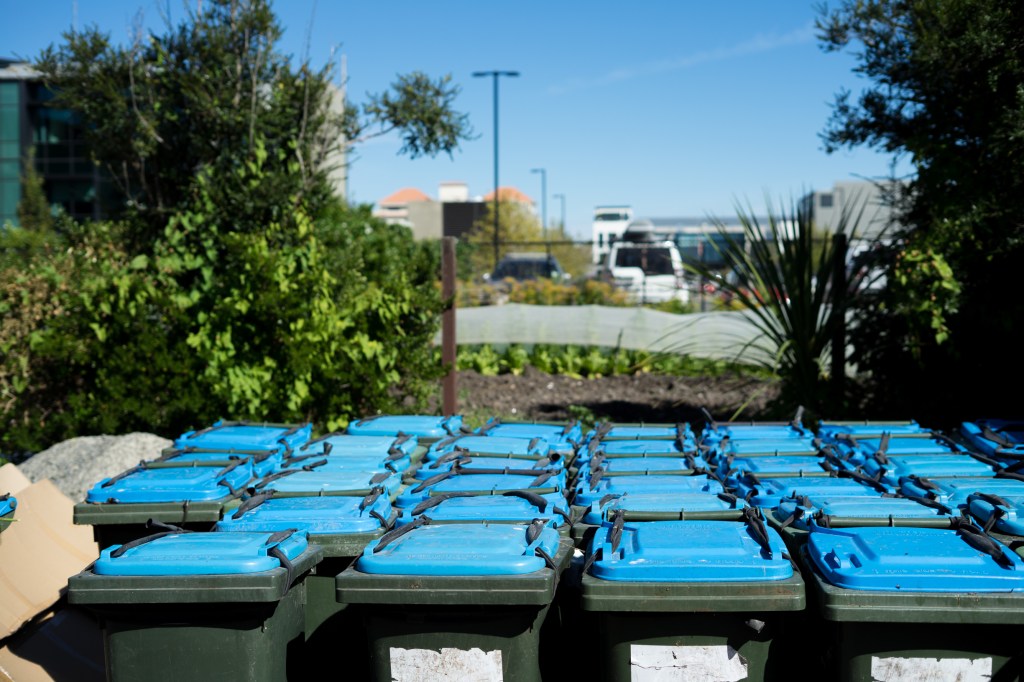
We are embarking on a project that traces how groups of people move up the ‘waste hierarchy’ and how such transformations shape people’s sense of self in relation to waste. This matters because issues like microplastic pollution, environmental contaminant leaching, and dwindling landfill space continue to negatively impact ecosystems and communities. In order for Aotearoa to avoid further waste crises, our use and disposal of material goods must change. Despite warnings and ample evidence, plastic, metal, organic material, food, excrement and building waste continue to grow.
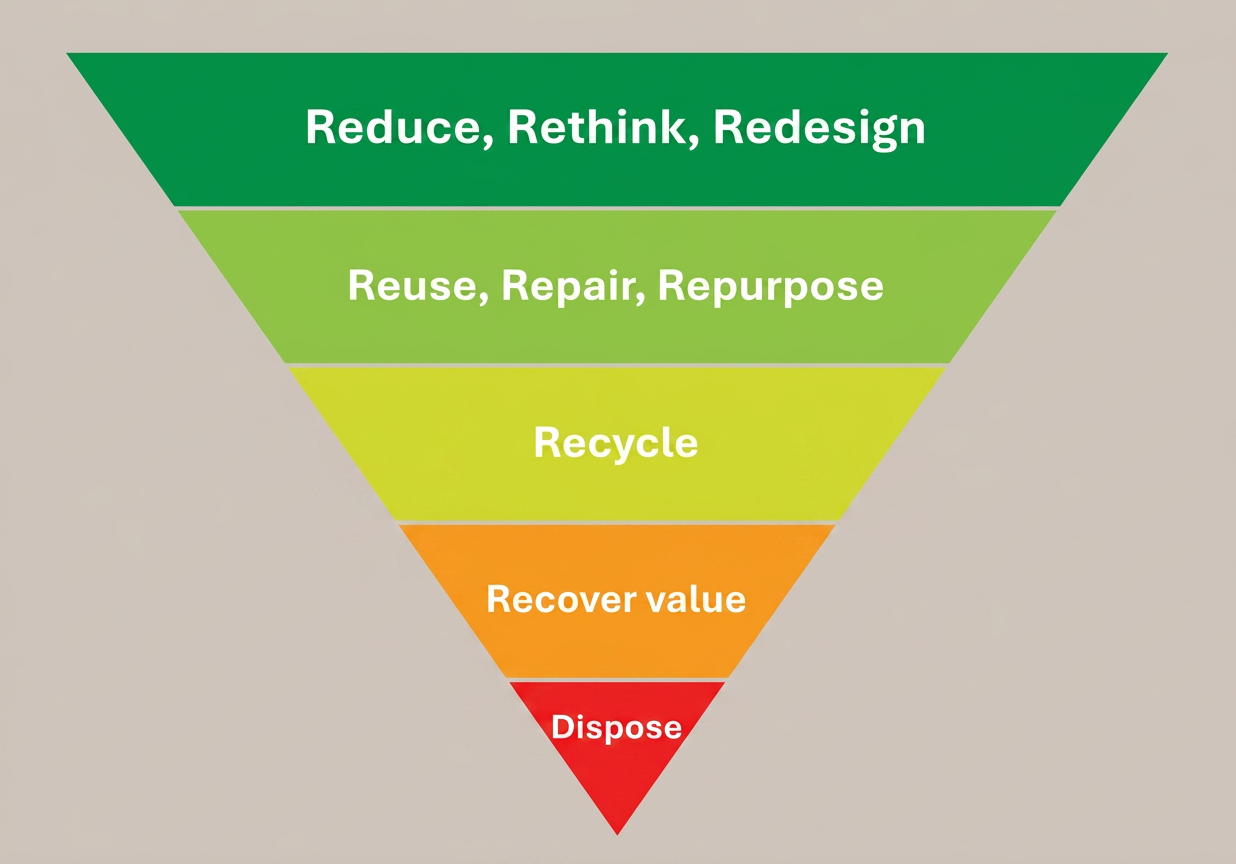
Shifting towards ‘circular economies’ is often proposed to stop such crises and to avoid the linear take-make-dispose model. Instead, a circular economy keeps resources in use for as long as possible, and the waste hierarchy (pictured below) conveys the kinds of actions that are most beneficial in circulating materials for reuse. Near the top of the waste hierarchy includes reduce, reuse and repair, and these are the forms of circular economy we are most interested in investigating.
The Waste Hierarchy — we should be doing more the top and less of the bottom!
Circular economy research often points to high tech advancements, hoping to deal with our waste and also create business value from it. However, these ‘solutions’ do not often lead to less waste! Instead, they often end up adapting to the current flows of waste being produced. Social scientists researching circular economy practices have found that in order to reduce, reuse, and repair materials, large amounts of often invisible or undervalued labour is required.
In simple terms, it takes a fair amount of people-power to wash, sort, clean, store and transport resources for their reuse. Or to undertake research, connect with knowledgeable people, upskill oneself, and foster patience to repair an item to keep it in use. And it takes a significant amount of effort to avoid waste altogether. Therefore, because a circular economy is a matter of who is engaged and what kinds of action they are taking, our research is interested in meeting with people focused on being less wasteful and keeping their items in use.
Waste is a culturally situated concept. Different cultural groups have different norms and taboos with regards to waste, including what is considered necessary waste. Different cultural groups also have different kinds of relationships to land and the ways land is currently used to ‘deal with’ waste. For example, in te ao Māori, understandings of tapu and noa might guide waste disposal in different ways from western norms. All of this difference is an important part of the ways people approach waste, and what moving up the waste hierarchy may look like for them. And these differences provide important insights into the challenges and solutions to current waste crises.
What does the project involve?
We have partnered with three important organisations who help people in Aotearoa to become less wasteful.
Para Kore is a Māori zero-waste organisation. Para Kore educates and advocates from a Māori worldview for zero carbon and zero waste in Māori communities and beyond. They run sustainability programs across Aotearoa, working with marae, iwi, early childhood centres, churches, community organisations, businesses and more.
Repair Network Aotearoa is a charitable trust that works with repair cafes and similar projects like tool libraries and maker spaces across Aotearoa, advocating for the right to repair legislation in Aotearoa.
Zero Waste Aotearoa is an organisation that supports over 150 groups across Aotearoa that are working towards zero waste in their local community.
To explore our interests in waste and identity, we are undertaking field work with our research partners and collectives engaged in practices at the top of the waste hierarchy. We will also be undertaking cooperative inquiry groups that enable us to bring together like-minded people to explore their practices relating to waste and to items that could become waste, their concerns and feelings surrounding waste, and what they would like to change in relation to waste practices for themselves and their wider collectives.
Who is this research for?
By the end of the project, we will have co-created an action plan with our community partners that identifies how government and community can invest in social innovations needed for circular economies in Aotearoa. The action plan will support practices at the top of the waste hierarchy and will be directed at waste decision-makers in community and government. As many people grapple with the waste that enters their households, workplaces, marae, community centres and the nature surrounding them, we hope that our action plan can help to bring us one step closer to a waste-less Aotearoa.
What’s next?
We are currently connecting with collectives on the ground who are engaged in actions of reduce, reuse and repair. This includes repair cafes, textile recovery groups, resourceful-craft organizations, makerspaces, tool libraries, community composters, and more. We look forward to keeping you informed of what we find out in the process!
You can find out more about who is involved in the project here:
“The desire to write grows with writing” is a quote attributed to Desiderius Erasmus of Rotterdam, a prolific writer, theologian and humanist in the 15th Century. I have not been able to find the source of the quote, but it continues to circulate because it seems like the truth of it is widely recognised by writers.
It has been on my mind lately as I have committed to writing 250 words a day on a new book, tentatively titled Postcapitalist Economies of Care. The 250 words started out as difficult — I needed to figure out a structure, a point, then write within that structure and point, which usually required some reading. But as I have gone on, for 3 weeks now, it has become easier. In fact, I come to sit in my home study in both early morning and late afternoon in the weekend just for the pure pleasure of it, even if I have already managed the 250 words.
It’s a strange experience really. I think the desire to write grows with writing as you start to figure out what you are trying to say then find the time and the way to say it. Right now, I’m only halfway through my chapter structure, but already at my word count for it — what that means is that I’m quite motivated to get back to it, get on with the next section and get to the end of the piece of work so I can then return to edit and sharpen.
I would also add that for me, the desire to write also grows with reading. When I read books, especially, I feel quite motivated to interact with their arguments and figure out how they differ or complement what I am thinking.
Finally, I’ve been working on a variety of interesting projects for a decade, and working on a new book is an opportunity to reflect on what they all mean and how they all help me consider my broader project of transitioning to postcapitalist economies of care. Watch this space!
Economic subjectivities in Pātea are not about catching up with capitalist norms but about sustaining inclusive, diverse economies rooted in cultural values and local agency. The town’s identity and resilience challenge dominant narratives of decline.
Ben Lilly researched Pātea for his Master’s of Arts in Geography at Massey University in 2024. Over the last year, he has been working on turning his thesis findings into an article for New Zealand Geographer. This week it was published — you can read it here.
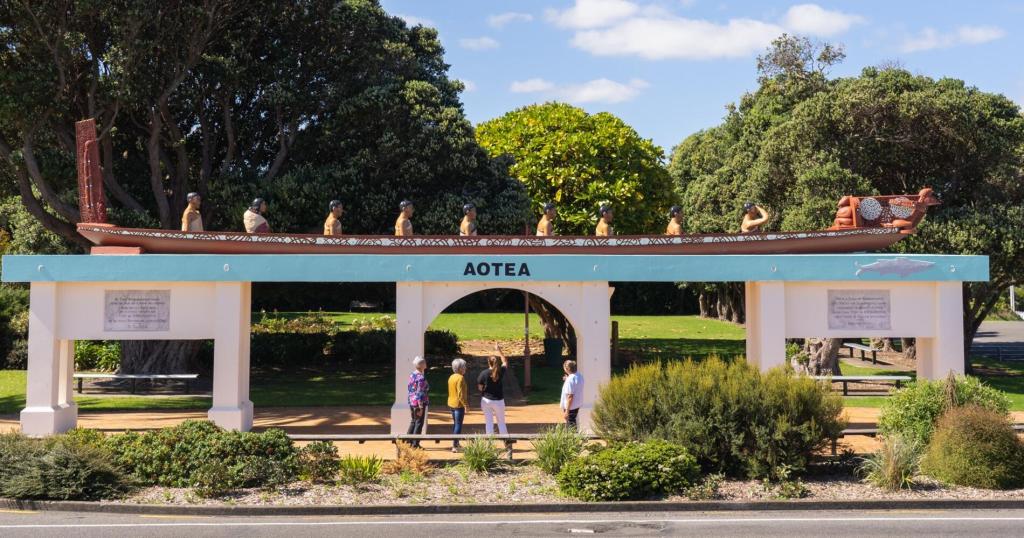
Ben interviewed community leaders in Pātea showing them the results of a media analysis he had conducted and getting their thoughts on the way their town was represented. He also explored a range of ‘more-than-capitalist’ cultural and care practices that had enabled Pātea’s ongoing survivance. Many of us have seen this showcased in one of the nation’s informal anthems — the hit song “Poi E” released by Pātea Māori club in the 1980s.
Pātea Māori Club released the hit song Poi E in 1983, not long after the freezing works closed.
Ben argues that when we label small towns as ‘left behind’, we buy into a linear trajectory of capitalist economic development where local autonomy and values are minimized. He suggests we shift to the language of ‘left out’, to highlight that the issue at hand is exclusion from decision-making rather than a failure for small towns to ‘keep up’. He provides examples of ways that Pātea residents have emphasized economic self-determination and autonomy after previous encounters with paternalistic industry relationships.
Ben Lilly is PhD candidate at Waikato University. He is the co-chair of the Early Career Research Network of the New Zealand Geographical Society, and is a member of the Community Economies Research Network.
This is a plain language summary for the article Expanding Circular Economies Through Transformative Community Investment authored by Gradon Diprose, Kelly Dombroski, Dean Stronge and Alison Greenaway. There are 50 free copies available from here.
This article is all about how we can make our economies more circular and sustainable. It’s not just about fancy new tech or being super efficient with resources. It’s also about social innovation and making sure everyone benefits.
Key Points:
Three Cool Examples: The article looks at three different enterprises in New Zealand – one in transport, one in energy, and one in food. There’s a regular business, a social enterprise, and a charity. Each one is doing awesome stuff with their profits to help people and the planet.
Reinvesting Surplus: Instead of just pocketing the profits, these enterprises are putting their extra money back into circular economy innovation. They’re supporting social equity and helping to build a circular economy where waste is designed out. This is NOT about designing new products for consumption, but about innovation in services: car-sharing, energy hardship programmes, and vegetable distribution.
Social Innovation: These businesses are coming up with creative ways to use their surplus. They’re challenging the old-school, take-make-waste model and showing that we can do things differently. The innovation is in the organisation and logistics, rather than new materials or tech.
Equitable Practices: They’re all about refusing, reducing, re-using, sharing, and repairing. It’s not just about recycling – it’s about changing how we think and act to create a fairer, less wasteful world. The organisations have an eye to equity and justice, making sure that a wider range of people can be empower to use more ‘circular’ and low-waste services.
By documenting what’s happening in these examples, the article shows how enterprises can use surplus in smarter, fairer ways to support the transition to circular economies. This article contributes to the goals of moving towards a caring, postcapitalist economy — but uses contemporary business language like ‘innovation’ and ‘investment’ in order to reframe these ideas for people and planet!🌱
We wrote this guide because we could feel something stirring across the region.
Recently I was part of a project documenting awesome projects in the Greater Wellington Region. In our work as researchers, community collaborators, planners, and advocates, we kept coming across people doing the quiet, determined, and deeply hopeful work of transition. These included composters and kai growers, local energy innovators, housing cooperatives, council staffers working behind the scenes, artists hosting place-based experiments, iwi-led projects regenerating whenua. As someone born in Wellington and who grew up in Wairarapa, I was really keen to connect with projects in this region but also to connect them with each other!
Often, these efforts were siloed or invisible to each other. But taken together, they point to something larger: an emerging transition infrastructure already in motion. Transitions in Action: An Urban and Regional Transitions Guide for Te Upoko o te Ika / Wellington is our attempt to document, honour, and connect these efforts.
What the guide is (and isn’t)
It’s not a plan. It’s not a blueprint. We explored a few different ideas for titles (I suggested ‘look book’), but it was Amanda that came up with the idea of a ‘field guide’.
So it’s a field guide—something that invites attention, orientation, and learning. It draws on interviews, workshops, and mapping work to identify over 50 projects across six transition domains: housing, energy, mobility, ecosystems, economy, and community.
To me, what is important is that these are not hypothetical futures—they’re already underway. And they’re reshaping our shared sense of what’s possible here.
What we’ve learned
Writing this guide affirmed a few things we suspected, and clarified many things we hadn’t yet articulated. A few key insights:
Transitions are already happening, but they’re uneven, precarious, and sometimes invisible to themselves.
Place matters. Transition in Wellington looks different than in other regions—it’s shaped by wind, faultlines, iwi relationships, governance structures, harbour edges, and long-standing networks of resistance and repair.
Community and institutional work are entangled. The most promising initiatives weren’t either grassroots or top-down—they blurred those lines.
Transitions need time and infrastructure. Many of these projects operate on goodwill and temporary resourcefulness. Without scaffolding—funding, policy shifts, relational infrastructure—they risk burning out or being co-opted.
Who we wrote it for
We wrote this guide for people already doing the work, to help them find each other. It was so awesome to see a range of the people who feature in the book turn up to the launches and meet each other!
We also wrote it for funders, public servants, and elected officials—those who say they want climate action or community wellbeing, but often don’t know where to start. The guide shows what’s already in motion, what’s needed, and where policy or funding could shift to support grassroots capacity without overriding it. We have had such a great response from local and central government — with Masterton councillor Stella Lennox, Wellington City Councillor Yadana Saw, MPs Celia Wade-Brown and Tamatha Paul appearing at our two launches!
Finally, we wrote it for ourselves. To better understand the ecology of transition in our home region. To see the patterns, the synergies, the tensions, and the possibilities.
What’s next?
Our hope is that the guide becomes a resource for conversation and connection. That it helps to legitimise and amplify the work already being done. And that it invites deeper reflection on what kinds of transitions we’re part of—and for whom.
We’re already hearing from local councils, community groups, and educators who want to use it in their work. And we’re in ongoing conversations with collaborators about how this guide might seed similar efforts in other regions.
One of the questions I keep coming back to in my work is: what really holds a community together? Not the big, flashy ideals, but the everyday stuff or what we might call the nitty-gritty. The washing-kids’-bums, negotiating-how-to-share-a-space, holding-a-meeting-with-too-much-cake kind of stuff. That’s where I think community is made—in the messy work of care.
Both are examples of what I call communities of care—where people aren’t drawn together by identity or ideology, but by the shared work of caring for something in common. Like many researchers into this area, I’ve been calling that kind of work commoning.
Care Is Not (Just) a Feeling
We often talk about care like it’s a soft feeling—but care is also labour. It’s exhausting, it’s beautiful, and it’s sometimes thankless, but it’s labour. In Te Hiko, that looked like local people working together to support financial wellbeing—asking, how do we plug the drain that’s sucking resources from our community? For LiVS, it looked like artists and organisers breathing life into vacant lots with murals, performances, and small everyday interventions that helped Christchurch slowly heal.
Both projects navigated two big tensions:
Who’s in and who’s out? Communities that care have to negotiate boundaries. Open enough to welcome new energy, but with some shape so the work can actually happen.
Care as a ‘practice’ that’s both affect and labour. There’s the heart-side of care—emotional connection, beauty, grief, joy. And there’s the sweat—coordinating projects, holding meetings, applying for funding. They’re both essential, and often unequally valued.
The Commons Is in the Doing
What binds these projects together is not ownership, identity, or even a shared vision—it’s the doing. The repeated, practical, awkward, loving, sometimes fraught ongoing practice of caring together.
That kind of commons-care is never perfect. It’s never resolved. It’s always in negotiation—who shows up, who does the dishes, who gets heard, who’s exhausted, who’s thriving.
But it’s precisely in that nitty-gritty negotiation that community is made and remade.
Why It Matters
In a world that feels increasingly fragmented, it’s tempting to look for clean answers: clear boundaries, easy fixes, grand theories. But maybe what we need is to get better at sitting in the mess. At holding complexity. At making space for real care—care that’s not just soft and fuzzy, but material, tiring, healing, and profoundly political.
I wrote this piece to offer a grounded, hopeful, and realistic account of what communities of care look like in practice. Not perfect. But very much possible. I hope you enjoy it!
When it comes down to it, the ‘nitty-gritty’ of care is rarely idyllic, and involves difficult collaborations and relationships with others. Whether it is washing a child, developing a constitution for a community group, or restoring a wetland, the practical details of caring are never completely straight- forward. Yet it is exactly this nitty-gritty negotiation of the details of caring for shared resources, spaces or matters of concern that holds communities together, rather than boundaries or shared identity.
The transitioning to caring economies project recently awarded a scholarship to Kelsi Henderson to study a Masters in Arts in Geography at Massey University. She will spend the first semester doing coursework, then develop a research proposal that aligns with the programme to complete between November 2025 and October 2026. Kelly caught up with Kelsi to find out a bit more about what drives her.
Ko Takitimu te maunga te ru nei tōku ngākau,
Ko Mokoreta te awa a māhea ahu māharara,
Nō Aerana, Kōtorana tōku tīpuna,
Nō Murihiku, Ōtautahi e tipu aku nei,
Ko Henderson, O’Neill ngā ingoa whānau,
Ko Kelsi Henderson tōku ingoa
Born and raised between Southland and Christchurch, Kelsi completed her undergrad at the University of Canterbury while working as a youth worker. She explains that this was a role she “somewhat fell into following the Canterbury earthquakes”. She studied a co-joint LLB/BA (sociology and geography). Following this, she worked as a solicitor in Te Whanganui-a-Tara before taking a role as Specialist Facilitator (Restorative Justice and Te Pae Oranga) in Waihōpai.
Both within and outside of paid mahi, Kelsi finds herself seeking ways to develop, refine, and express her values and understanding of the world and those around her. Kelsi says that
This involves voluntary mahi, involvement with intentional community housing, and a rich family life where I am proud to have become a guardian of one of my epic nieces.
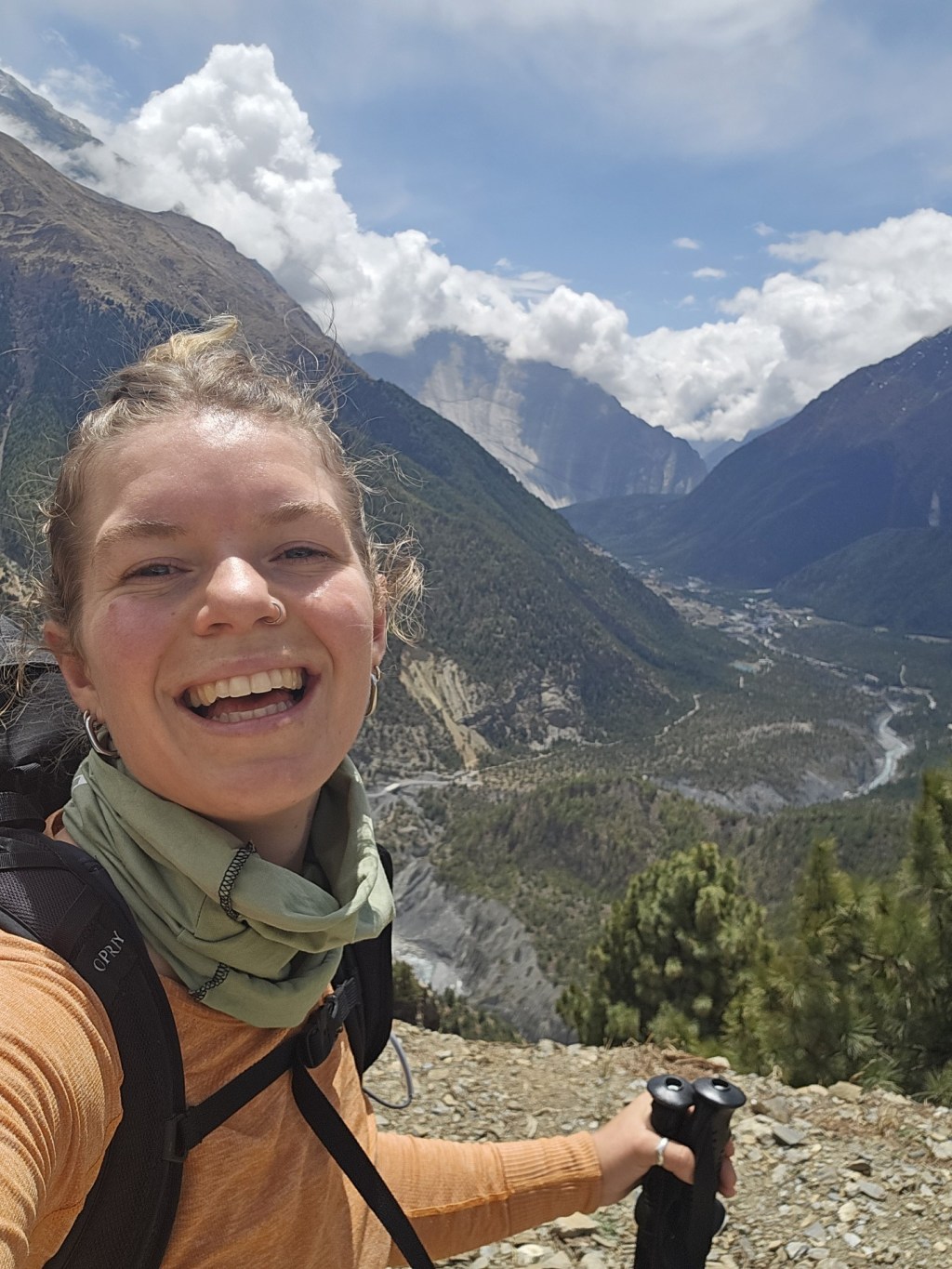
She refills through time outside, including a recent stint as a hiking guide throughout Aotearoa. Kelsi says
I’m excited to join the Transitioning to Caring Economies team and continue along this path and to contribute to such an exciting project exploring possibility and opportunity for social and economic change, prioritising the fullness of well-being.
We look forward to seeing where Kelsi takes her scholarship over the next year!
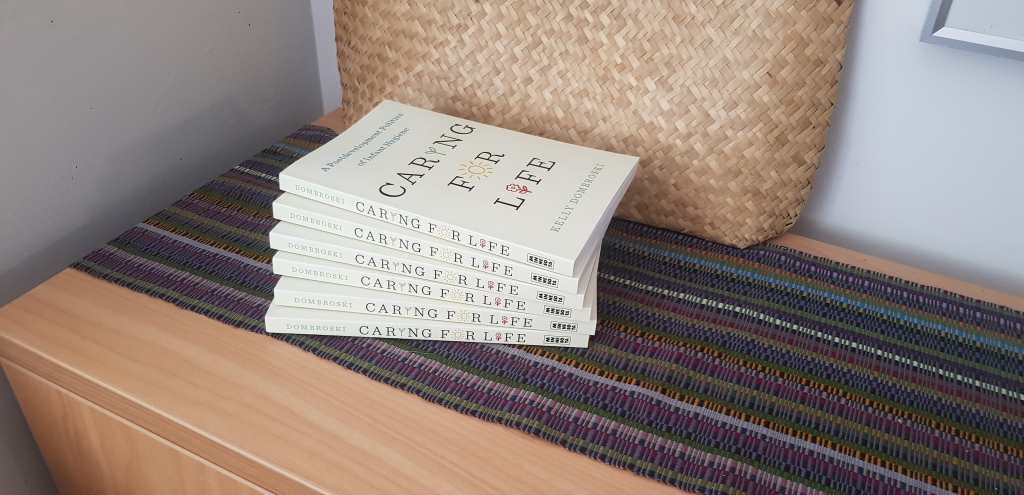
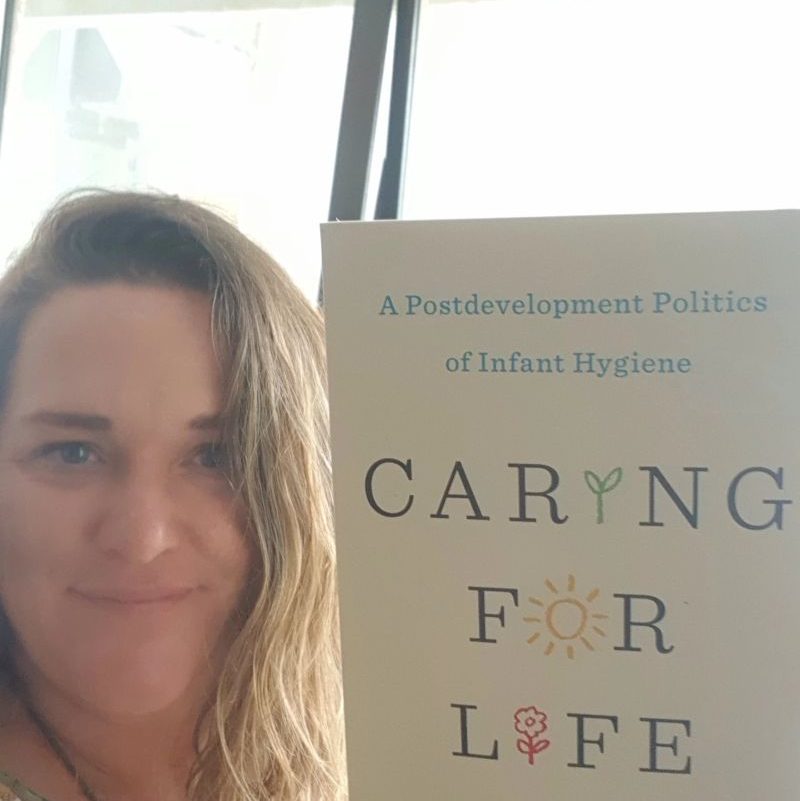
This research note reflects on the fieldwork I carried out in China, also detailed in my book Caring for Life: A postdevelopment politics of hygiene.In the research note, I explore how researchers can study care and caregiving by paying attention to embodied experiences and considering cross-cultural differences. Here are the key points:
Embodied Methodologies: I explain how I used embodied methodologies in ethnographic research on care. This means understanding how our bodies and experiences shape our understanding of care and caregiving. For me, paying attention to what my body was telling me as I crossed cultures of care helped me perceive and understand cross-cultural differences in care.
Awkward Engagements: I think about how my body perceived and experienced difference through Anna Tsing’s concept of awkward engagements, where different cultural understandings and practices of care interact. These interactions can lead to new insights and understandings of care.
Pluriverse Concept: I reflect on the concept of the pluriverse, which refers to the multiple, overlapping realities of ontology, culture, and experience. This concept helps us understand the diverse ways care is practiced and experienced, and to make space for other care realities in our research rather than seek to find one universal approach to care.
Throughout the article, I draw on various scholars’ work and provide examples from my own research in the Asia Pacific region.
I think this article would be useful in methods classes where ethnography or cross-cultural research is discussed. It’s relatively short and easy to read.
Conducting research into infant and childcare in a range of homes in western China in 2009
In February 2006, 6 months pregnant, I left Palmerston North NZ for Canberra, Australia to pursue a PhD with Katherine Gibson (of JK Gibson-Graham). Thus began a journey of research and learning in Australia, China, Aotearoa NZ, through the birth of four children and homes in five different cities. And in February 2024, some 18 years later, I celebrate the monograph that emerged from all that work!
When I went into the project 18 years ago, I was really interested in how the processes of Westernisation and globalisation were playing out unevenly around the world. I was particularly interested in pockets of resistance to corporate globalisation. In my fieldwork in the far west of China in the province of Qinghai, I studied the relationship between the local nappy-free infant hygiene practice, space, place and cultures of health and wellbeing. During that time, I discovered a whole online community of westerners also trying to learn the nappy-free infant hygiene practice but without the support of their local environments or cultures. In both groups, there was a resistance to the use of disposable nappies, and the deliberate cultivation of embodied practices of hygiene that required less material (and plastic) stuff.
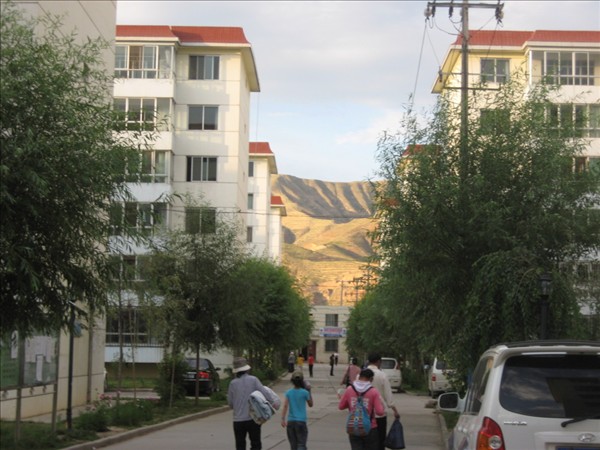
Fieldwork was conducted in the city of Xining, in Qinghai province in the far west of China
Hygiene is social, material and spatial
As a book project, Caring for Life: A postdevelopment politics of hygiene speaks more to our post-pandemic hygienes, as well as the broader question of how does social change happen. In the revisions made for the monograph, I significantly rewrote and retheorised most of the material to build an argument about hygiene assemblages.
Hygiene assemblages is a term referring to the social, material, cultural and spatial practices that come together to keep hygiene. In the Qinghai examples, these assemblages gathered around strong social and spatial practices — caregivers learned the specific signals for baby’s wee and poop, and held them out over appropriate places — wee against a tree, on the concrete, on the tiles, or over a drain. Poop over a newspaper, a basin, a toilet or a pile of ash from the fire (in rural areas). But they worked to keep hygiene nevertheless. In the Australian examples, caregivers were trying to learn these signals too, but with less historical and cultural knowledge to draw on. Their assemblages gathered around the material aspects of the practice: potties, bags, nappies, wipes, toilets, containers and more.
Of course, all hygiene assemblages have both social and material practices, and all have a spatiality and cultural component. What I was interested in was the possibilities of learning and assembling new hygiene practices and assemblages through cross-cultural learning. Could these practices from the far west of China influence hygiene assemblages in Aotearoa, Australia and other places in the West? In asking this, I developing thinking around hybrid research collectives to argue that the early adopters of ‘elimination communication’ (as the nappy-free hygiene practice was called) were researchers, experimenting and documenting their hygiene assemblages in ways that made it more possible for others to pick up the practice.
It has been interesting to work on the book over such a long period: things that were not normal 18 years ago have become normalised. During this time, elimination communication has become more mainsteam, as have other alternative hygiene practices such as using menstrual cups, reusable pads or period panties, and a whole range of modern cloth nappies. We have also had a global pandemic where the first response was not really medical, but social — in the form of social distancing and changing behaviours and habits before vaccines were produced.
Photo by Eric Lafforgue, from Flickr
What does Caring for life have to say about transition?
So what does the book tell us about transitioning to caring economies? Here’s three thoughts on that:
Transition and social change is material, social and spatial. It’s not about individuals, although individuals and their behaviours matter. It’s about the broader assemblage of these materialities, socialities and spatialities.
Passionate collectives of individuals experimenting with different material, social and spatial arrangements can spark and seed change. In the area of economic change, this means paying attention to what collectives of community groups are doing — degrowthers, community economy organisations, artist collectives, Indigenous economies, regional and local economies and more. It’s not that these experiments have to be scaled up ‘as is’, but that they produce important knowledge that can inform change.
We can and should learn from places that are considered ‘less-developed’, ‘out of the way’ or ‘undeveloped’. For it is in these places where different diverse forms of cultural, social, material and spatial arrangements can be found that might be better adapted for transition.
If you are interested in taking a look at the book, see here.
I’m also available to give talks on the book this year, just get in touch!
With my colleagues David Conradson, Stephen Healy, Gradon Diprose and Amanda Yates, I recently published an article for a special issue of the journal Cities. Here’s a plain language summary!
In the aftermath of devastating earthquakes in Christchurch, New Zealand gaps in the landscape emerged, and some new ideas and possibilities were able to take root and eventually thrive. Our article pulls together some of these interesting alternatives and uses the idea of ‘counter-city’ to describe what’s going on.
What is a counter-city?
When we think about cities, we often think of those in charge making decisions, sometimes influenced by the interests of big businesses and industriesto maintain a preference for capitalist modes of competitive development. But we might also think of the ‘counter-city’, thinking of everyday people, artists, Indigenous leaders, and communities who maintain more collaborative modes of urban change.
The counter-city isn’t a fully formed alternative to the regular city, and it doesn’t completely get rid of the business-as-usual ways of doing things. Instead, it’s a mix of innovative changes that invite us to think about a different kind of city. It’s a city where we explore new possibilities beyond the usual, always-capitalist city.
In our article, we discuss how changes and experiments in Christchurch, often led by community groups, transformed the city into a place where people could do things differently. This counter-city is a place where “hidden but now emerging ideas and ways of doing things” have turned into a “different way of doing things.”
If concrete is the usual infrastructure for the business-as-usual city, what is the infrastructure of the counter-city?
The counter-city is made up of structures, or “infrastructures,” that provide the foundation for how people organize and interact in their community. These infrastructures were shaped by the earthquakes and the changes they brought.
If we think of the counter-city within Christchurch, we think of the “commons” and “commoning” practices present, where people came together to share resources and spaces. While these were often temporary, they aimed to shift the management of resources and spaces from private responsibility to shared responsibility. They were led by the community, with people working together for the greater good. We can think of these as “social infrastructure”, relatively stable structures that provide a foundation for people in the counter-city.
One such commons/infrastructure was an urban farm run by a social enterprise. In our work interviewing young people and staff on this urban farm, we found that in this counter-city, people also started to see themselves differently even if their commoning activities were temporary. They moved away from the idea of “everyone for themselves” and embraced a sense of caring for each other and the community. This way of thinking and being is what we call a “postcapitalist” subjectivity. In simple terms, it’s like moving from just thinking about money and profit to thinking about taking care of each other and the environment.
In the postcapitalist counter-city we are trying to describe, we called these people “commoners.” Commoners are individuals actively involved in caring for shared spaces, knowledge, or resources. They are at the heart of the counter-city’s transformation.
How do these infrastructures relate to people and the way they understand themselves?
In our article, we look at an urban farm in Christchurch. We explore how it became a “commons” where people and the environment came together as a kind of infrastructure of care. We’ll see how this farm changed young people’s way of thinking and acting, making them more focused on caring for the community and the environment. They spoke of a shift in their relationship with the world around them, encompassing everything from the land and garden to the larger ecological systems, the food system, the community, and their fellow workers. These transformations were collective, bearing a striking resemblance to the concept of “homines curans” – the collective caring subject – rather than the individualist, work-focused “homo economicus.” Another way to say this is that they became something more like “commoners” — people who care for commons together.
This journey through this example can help us understand what a counter-city might mean, and how the shift in how people see themselves and their community can shape the future of cities.
Drawing from postcapitalist theory, we explored the dynamics of commons as infrastructure, commoning, and subjectivity in this example. Encounters with more-than-human infrastucture/commons created conditions for collective caring urban subjects to emerge. The commons, often overlooked, can be viewed as an infrastructure of care for the counter-city. It sets the stage for the growth and flourishing of collective caring subjectivities.
Many thanks to ChatGPT, who helped to simplify some of our language in this summary.
The reference for the article: Dombroski, K., Conradson, D., Diprose, G., Healy, S., & Yates, A. (2023). Cultivating commoners: Infrastructures and subjectivities for a postcapitalist counter-city. Cities, 143, 104635. https://doi.org/10.1016/j.cities.2023.104635
Ben is a co-funded Masters student studying economic change in the small town of Pātea, Taranaki. I’m part of his supervisory team and took a trip out to Pātea to meet up with Ben and have a look around South Taranaki.
Tell us a bit about your background and how you got interested in economic geography
I’m originally from North Taranaki, in fact I’m currently there now studying by distance. I went to study geography at Massey Manawatū straight out of school. I came to the topic because geography allows for academic diversity, being able to address topics and borrow ideas from other physical and social sciences. Economic geography is a particular interest as I can explore impacts of and solutions to capitalism’s flaws.
What are you working on now?
I’m currently completing my Masters’ thesis, where I am exploring people’s responses to change in the context of a small town, Pātea. This project includes a media analysis and semi-structured interviews with community leaders.
What do you think the biggest challenges will be?
One of the biggest challenges in my research is the interviewing. Having never done anything like this before, I have found it a difficult process to work through: planning interview questions, conducting interviews, and then discovering mistakes or oversights made, during transcription and analysis. It has definitely been one of those skills that can’t be just read about – it has to be continuously tried and improved for oneself, but I do think I am much better at interviews now than I was before my first.
What are some of the surprising or interesting things you have discovered in your fieldwork so far?
An interesting part of Pātea is the culture which stands in contrast to statistics and some media coverage. It has been evident with everybody I’ve talked to that they understand their community is sometimes called ‘lower socioeconomic’ by others. But they reject this as a sole identity and instead have embraced an engaging community lifestyle where local people and families can thrive peacefully and cooperatively. While there are certainly economic challenges, to identify a community like this only as ‘poor’ is to miss the point entirely. It is also clear that this identity is constantly shaped by the community leaders I talked to, who are passionate about their place, and inspire others to share in that passion.
Ben Lily is researching people’s responses to change in Pātea as part of a Master’s project funded by the John McArthur Scholarship in Geography
How do cities transition to places of wellbeing for both humans and the environment? This is a key question in our book-in-progress “A Fieldguide to Wellington Transitions”. Amanda Yates, Thomas Nash, Gradon Diprose and myself are interviewing in Wellington this week to aquaint ourselves to the details of transformative transition projects already underway in Wellington.
As part of my Rutherford Transitioning to Caring Economies work I look to take on students doing aligned projects funded by other funders. Heidi McLeod is a PhD student I am co-supervising enrolled at Lincoln University. She is a Food Transitions 2050 scholar, lives in Hawke’s Bay, and has participated in the research postcapitalist possibilities winter school.
Heidi, tell us a bit about yourself and what you are working on.
I am an out and out foodie and I love good food. I am passionate about whole food and food that comes from a quality environment. I aim to live lightly on the earth, well lighter and lighter, and I care about how our world cares for itself and each other. My immersion in Human Geography over the last few years has seen me contemplate the elements of space, place, scale, and flow. These touchstone points have helped me engage with how we live and thrive in the world today, yesterday, and tomorrow. Because I have had a lifetime connected to food, I used my geographic learnings to think about food and our food system – connecting things that I love and have meaning to me. If I can’t feed you, I have failed!
To explore how food is in space, place, scale and flow, I have come to think about production and consumption, the ways in which food is connected across myriad places and flows, and finally settling to think about food for the people of Aotearoa New Zealand. I have been drawn to the discourse around care and ethics, recognising the importance of diversity, surplus, and the need for different political and economic mindsets to provide food to people in a way that does not limit access or cause social and environmental harm. To this end, I have begun a PhD, through the Food Transitions 2050 Joint Postgraduate School, aimed at examining the impact of local food systems and socially and environmentally just food security initiatives. I’m right at the beginning, but have a great team and I can’t wait to get started on my research and see what I can learn to share with Aotearoa New Zealand about our food system.
What are the big transitions you see needing to happening in your area of interest?
I’m really conscious of Aotearoa New Zealand’s colonised trajectory into agriculture, and our position within global systems as a dairy and meat exporter (alongside other smaller but lucrative produce and products) to international markets. My concern is that our national focus appears to be on taking every opportunity to maximise use of our environment to harness export or niche markets for an optimum price. However, at the same time Aotearoa New Zealand, like many other countries, is faced with complex problems of malnutrition, climate change, environmental degradation, and social inequalities which ring the alarm bell of food insecurity. This begs the question, what transitions are required to improve outcomes for Aotearoa New Zealand’s eaters and also many agricultural producers?
This is the intersection with caring economies literature, and more specifically with the oeuvre of Gibson-Graham’s work on diverse economies. It feels to me that our current political and economic structures prioritise policy, regulation, and funding that favours and progresses our agricultural export potential ahead of attending immediate needs of Aotearoa New Zealand’s eaters and smaller producers. The fantastic fact is that we can absolutely do both, it’s not a case of ‘either-or’ but of ‘both-and’. However, in my mind, our structures of political economy need to recognise and embrace diverse and caring economies, pursuing social and environmental justice, not just export drivers. I think there is space for both and we need to transition to a place of enabling these diverse and hopeful possibilities.
What inspires you from the communities you are working with?
I’m not yet researching with communities for my PhD. But, based on research I’ve done in Taranaki and with food system innovators who are reinventing food supply/value chains, I’m inspired by the intuitive knowledge these growers who are working against the grain to produce amazing produce in a way that betters our environment, provides ideal livelihoods, and redistributes value to producers. They all exhibit welcome additional options to our mainstream systems and conveniences. I’m inspired by the way they can give full effect to their ideals be they cultural, environmental, or social. I’m disheartened by the challenges they face, the lack of visibility and appreciation they receive, and the barriers they face as they continue to innovate and experiment with the highest benchmarks of care and ethics. Therefore, I want to utilise my PhD and ongoing research to highlight the value of these caring economies in order to enhance policy, regulation and our lived experiences.
What are some of the challenges in doing a PhD in this area?
He tangata, he tangata, he tangata. There are challenges wherever you look, but with the right people on your waka you can crest any wave.
Heidi is a food systems researcher who is passionate about local food.
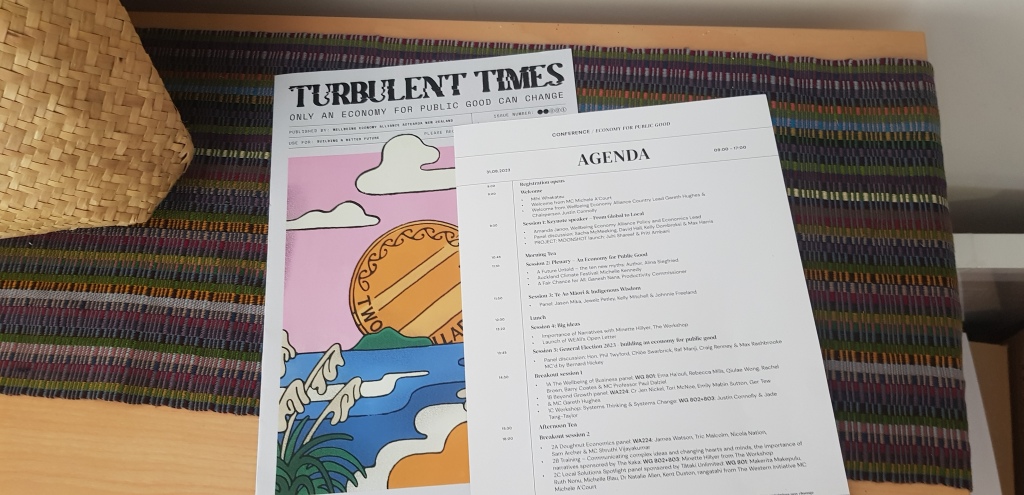
Below is the script for my response to Amanda Janoo’s talk at the Economy for Public Good Conference, August 31st at AUT.The conference was organised by the Wellbeing Economy Alliance of Aotearoa. Thanks to Gareth Hughes for the invite.
Tēnā koutou katoa, ngā mihi nui kia koutou.
E ngā mana whenua o te rohe nei, ko Ngāti Whātua ki Orakei, tēnā koutou.
E ngā kaikōrero o te ra, tēnā koutou.
E ngā tāngata katoa kua tae mai nei kei te tautoko te kaupapa o tēnei ra, nōku te hōnore ki te tu, ki te mihi ki a koutou katoa.
No Wairarapa ahau, he tangata tiriti ahau. No Kotiwana ōku tūpuna. E noho ana ahau ki Papaioea, e mahi ana ki Te Kunenga ki Purehūroa Massey University. Ko Kelly Dombroski tōku ingoa.
Mauri ora ki a tātou katoa.
Kia ora everyone, it’s such an honour to be here today with all of you at this event looking at wellbeing economies – and I use it in the plural – I will get back to that later.
Amanda, thanks for your talk today laying out how we got here in terms of economic thinking and practices. There are two responses I’d like to make in support of your talk – both for situating this kaupapa in Aotearoa but also about the way we think about economies more generally.
Have you noticed already that I’m talking about economies in the plural?
I’m a geographer, and the big thing that we are into is this idea of ‘place’. Place matters. Where you are in the world matters. It makes a difference. And although we have experienced incredible globalisation of our economies in the past century, place still matters for economies. I’m going to ask for a small change to our language here today – to speak not of ‘the economy’ as if it was this big coherent immoveable and solid thing, but to speak of economies – and to speak of economies as diverse, place-based, interconnected yes, but also unique and uniquely ours.
Even now, some of you are thinking – yes of course ‘the economy of New Zealand’. Others are thinking ‘but the system!! The system!! It’s all connected!!’. YES it is all connected, but kao, it is not one economy necessarily. We all participate in interconnected but place-based economies. As Amanda has alluded to, it is their ubiquity across the world that our hope for further change lies.
So the first step for those of us interested in wellbeing and economies is this: to recognise the diverse range of economic activities already in play in our place-based economies. The vast majority of these economic activities lie below the waterline – that is, they are not measured by GDP, they are not studied by many economists, they are not considered when economic planners think about how we might try to secure housing or food for our whānau. These are the gifting, social surplus, commoning, solidarity, hapū, community and volunteering economic activities – noncapitalist labour, noncapitalist enterprises, noncapitalist transactions, property and finance. These are already here if we look below the waterline. I’ve interviewed and researched dozens of community economy groups over the last decade, and done in depth studies into what they’re doing.
For wellbeing economies in Aotearoa, the first step is to inventory what we already have in our place-based and regional economies at hand. These are like the ingredients in our pantry. We can cook up a boring meal based on one big lump of potatoes while everything else rots, or we can pull out and support all the decent ingredients that we have already at hand.
The meal has some parameters: it has to be nutritious and filling, but it also has to meet cultural requirements of our places– to feed our guests without shame, to include important foods that have meaning to us. It has to be ethical too – to not be made up of foods that are destroying our lands and seas and peoples lives. It also has to be affordable, and hopefully to not be wasteful. The parameters of dignity, purpose, particpation, care for the natural world that Amanda mentioned are good start points. If we think of our economies as pantries rather than massive singular systems, we can also think of ourselves as ethical collective actors in our place-based economies. What meal we cook up is also a result of the decisions that we collectively make – they are not automated laws of the market or economy that force us to act to only in one way, as if we were rational economic robots constantly outsourcing the costs of our lives to others if given half a chance. We can think a bit more about what these meals might look like.
If we think of our economies as pantries rather than massive singular systems, we can also think of ourselves as ethical collective actors in our place-based economies.
Kelly Dombroski
So for me – and this is my main point: we have to talk about economies in the plural, to map out the ingredients we have to work with already, to build on that and make decisions about combining these economic activities into economies at a lot of different scales and in different places around the motu. And this is what our mahi has been doing – in Ōtautahi, and now in Te Whanganui a Tara – inventorying the best ingredients that we already have and writing them up and sharing them around.
It is about collectively working with what we have in full recognition to the diversity of answers to the question “how do we live well together”? with the answer partly being ‘start where we are, with what we have at hand’.
Nō reira, ka tika te kōrero: mauri mahi, mauri ora – let’s be the people that do that mahi of working out how to live well together in these challenging times.
Great news! We are now able to confirm the PhD scholarship in Transitioning to caring economies has been awarded to Swarnima Kriti.
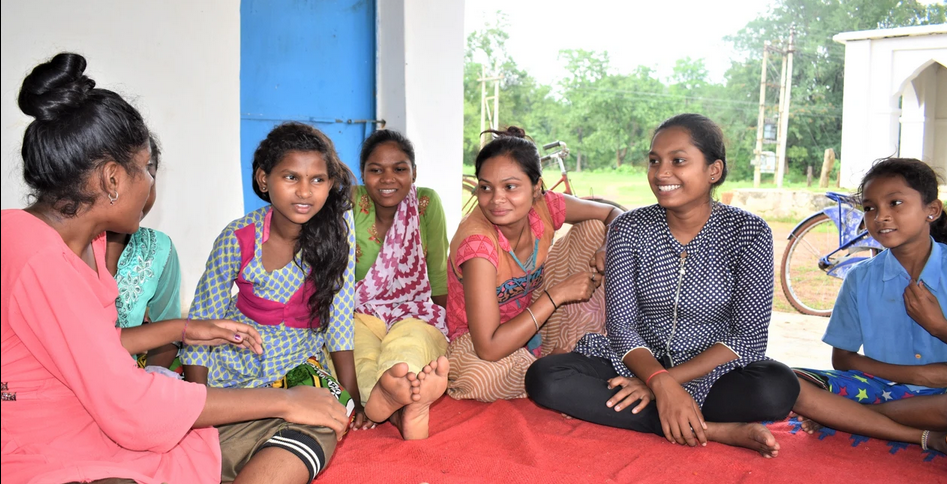
Swarnima is an action researcher in the central Indian state of Chhattisgarh. She has both lived and worked in a small Indigenous village with a group of young women interested in questions of gender, development and ecology. Together, Swarnima and the other young women have set up a cooperative called Chinhari: The Young India (www.chinhari.co.in). Swarnima has completed an MPhil in Development Practice, and published some articles. Her latest published article is “Hegel and India” at The GCAS Review.
Swarnima will join the caring economies project and be based at Massey Palmerston North, while living in Porirua and back in Chhattisgarh for parts of the PhD project. Her project includes enabling a creative and constructive exchange of learning between communities doing community-based economic innovation in India and New Zealand. Our research partners in Porirua are Te Hiko centre for economic innovation. I asked Swarnima a couple of questions in the lead-up to her big shift to Aotearoa New Zealand.
What attracted you to the Transitioning to caring economies project?
The Transitioning to caring economies project attracted me because of two reasons. One, it gave me the opportunity to learn about collective economic subjects, their actions and institutions. And two, it focused on “writing rights” i.e. writing about efforts communities put into finding sustainable ways of life than “writing wrongs”. These learnings become important for action researchers like me to create a confluence of alternatives nurturing post capitalist practices.
What do you think the biggest challenges will be in completing your PhD at Massey?
I believe my biggest challenge in completing this PhD would be my field work in New Zealand, especially building a relationship with communities there. My work in the past has been largely based on my strong relationships with the community. It may be challenging to juggle between understanding the community, living with them, creating relationships and minimizing the cultural gap.
We look forward to having Swarnima arrive and join us at Massey and the Community Economies Research Network NZ, beginning in November 2023!
Swarnima is an accomplished action researcher interested in community-led economic innovation.
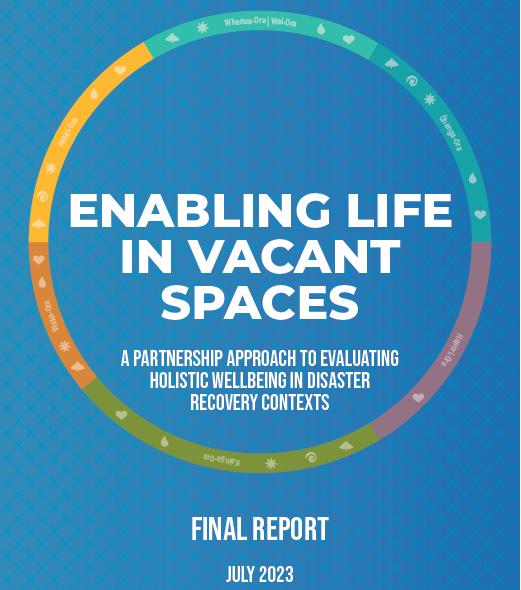
Measuring and communicating the holistic wellbeing outcomes of community intiatives is often difficult, time-consuming and can miss important intentions and outcomes. Our recent report documents our 3 year project with Christchurch organisation Life in Vacant Spaces (LiVS), trialling a method of evaluating wellbeing outcomes of 27 of the more than 700 projects supported by LiVS over ten years.
Enabling Life in Vacant Spaces: A partnership approach to evaluating holistic wellbeing in disaster recovery projects reports on our experiment with a “Community Economy Return on Investment Approach” combined with a holistic urban wellbeing tool based on evidence-based urban wellbeing actions for change. We found that this way of assessing holistic wellbeing ‘returns’ on investment could help communicate outcomes in a more holistic way.
However, we found that the method still relies on some expert input and some more time-consuming qualitative and relational methods.
Next steps are to develop then test a community-based ‘how to’ guide that helps community groups develop their own methods for assessing their holistic wellbeing returns. The report will be a useful start point for community groups, local government and funding agencies to think about how they approach evaluation for both human and environmental outcomes with reference to the ‘inputs’ of investment — both financial investment and investments of time and energy!
This report was part of a the Building Better Homes, Towns and Cities Urban Wellbeing National Science Challenge. The first two years of my Transitioning to Caring Economies through Transformative Community Investment research programme specifies collaboration with the Urban Wellbeing stream. The report was authored by Kelly Dombroski, Gradon Diprose, Matt Scobie and Amanda Yates.
It is my great pleasure to introduce Daena Moller, who was awarded with a scholarship in the Masters in Sustainable Development Goals programme in the School of People, Environment and Planning at Massey University. She is an incredible wahine toa who leads in her communities in caring and innovative ways. As part of her scholarship, she will spend time as an intern on the Transitioning to Caring Economies Project in 2024.
I am passionate about caring economies and doing my part to make a difference in Aotearoa – one individual and whānau at a time.
-Daena Moller
Kia ora koutou, ko Daena Moller tōku ingoa. He uri nō Ngāti Maniapoto, Tainui, Ngāti Rangatahi hoki.
I am a māmā of 6 tamariki and it is in the nurturing and raising of my whānau that I am passionate about caring economies and doing my part to make a difference in Aotearoa – one individual and whānau at a time. I am humbled to have the following opportunities to serve my iwi, community & Aotearoa:
In Tāmaki Makaurau I am a founding trustee of Takiwānaga ki Tāmaki Makaurau, a kaupapa Māori charitable trust created to support whānau with Takiwātanga (Autism Spectrum Disorder) in a holistic and mana-enhancing way. Through lived experience of the challenges and barriers whānau face, our purpose is to understand, support, inform and advocate for our member’s needs. We organise disability friendly activities as well that encourage the whole whānau to attend and have fun together. This group is not exclusive to Māori but open to all families who are interested in a holistic and whānau oriented approach.
Tāngata Turi (Māori deaf): This project listens to the voice of Māori deaf through Māori interpreters who express their urgent desire to have their aims and aspirations heard and realised. This work involves advocacy and cross-sector collaboration with tāngata turi fully involved to address the challenges and barriers they experience.
Ngāti Rangatahi Whanaunga Association: This project identifies and repairs housing of highest concern in Ngāti Rangtahi rohe (area) and makes improvements to bring it up to a quality livable standard. A gathering of whakapapa (genealogy) and pūrākau (stories) are captured and stored. We are establishing an iwi database and communicating with Ngāti Rangatahi whānau worldwide to keep everyone connected..
Te Kāhui Manukura o Kai Ora (Māori Dietitian rōpū of Aotearoa): Through this kaupapa I support Māori dietitians and dietetic students throughout Aotearoa to fulfill their aspirations. This includes building a support network and advocating for culturally safe training programmes and workplaces for Māori dietitians to thrive. In doing so, our members can better serve whānau in their communities to have good health and wellbeing through kai (food).
Aotearoa Sustainable Development Goals Alliance: This organisation has been established in response to a ‘Call to Action’ to capture the national response to the sustainable development goals (SDG). I support this organisation to collaborate with the tāngata whenua, community and voluntary sector, business, academia, local and central government to promote a positive response to the SDGs in Aotearoa. This is no small task, but necessary as we all work together for a better and sustainable country to live.
People harvesting green leafy vegetables from damp, dark soil
People in Aotearoa New Zealand spend more and more time indoors, and less time connecting with te taiao than our ancestors did. For many of us, we don’t think of ourselves as connected to the land in a practical way — although we may feel more abstractly connected to places and spaces. How do we build relationships with the land and places that are intimate and knowing? Why should we?
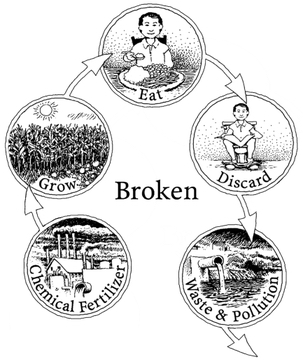
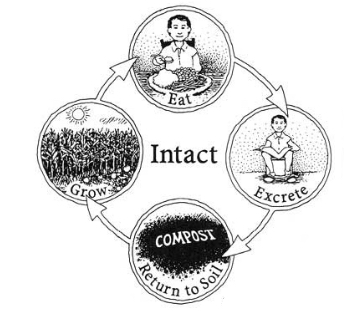
Scholars have talked about the idea of ‘metabolic rift’ — the disconnect that many urban people have when it comes to the metabolic cycle. Our food is produced far away from us, and our food scraps are taken away from us to landfill or other (hopefully better) places. Even our shit is taken away through pipes to who knows where. This mean we aren’t really viscerally connected to the cycles of production, consumption and decomposition that keep us all alive. The metabolic rift can be bigger than this too: in Aotearoa New Zealand our soils produce foods for export and the waste from those foods is handled elsewhere in the world — but we then have to import fertilisers to keep that system going! The ‘circle’ of the metabolism is broken.
Jenkins, J. (2005). The humanure handbook: a guide. Grove City: Joseph Jenkins.Broken and intact nutrient cycles
This is a big problem for our economies and our whenua. When there is no circularity to our production, consumption and decomposition, we are disconnected from the effects of our actions on the land. It’s also a big problem for our understanding of ourselves as economic and environmental actors. How can we see ourselves as relating intimately to the environment if we are encouraged to see ourselves as part of a massive import export global system machine?
When there is no circularity to our production, consumption and decomposition, we are disconnected from the effects of our actions on the land.
In my work, I’m interested in the relational side of economies, how we understand ourselves as economic and environmental beings, and how that affects the way we act in the world. I have had the privilege to study an urban farm where young people and others are invited into a relationship with the soil through practices of composting and gardening. They are invited to close the metabolic rift quite literally by eating and even shitting on site in a composting toilet! But they are also invited to close the metabolic rift by coming into an attentive and observant relationship with te taiao, the natural world.
Reconnecting with the soil in this way creates space for reconnecting with oneself as a different kind of economic actor. It invites us to understand ourselves and our role in the economy as relational and as more active producer and activist, and less of a passive consumer. Sasha Goburdhone and myself wrote a commentary on this for New Zealand Geographer, which just came out this week. I invite you to check it out, and leave a comment to get the conversation going. What do you think about the idea of metabolic rift? Is it a useful analysis?