The most recent installment in the podcast series with Tara Brabazon is now available. This was super fun! We discuss the paper I co-wrote with colleagues, published 2023, entitled “Cultivating commoners: Infrastructures and subjectivities for a postcapitalist counter-city”. We discuss the collaboration with Christchurch urban farm Cultivate, the idea of subjectivity and how being outdoors might help shift subjectivities.
Cite the article as: Dombroski, K., Conradson, D., Diprose, G., Healy, S., & Yates, A. (2023). Cultivating commoners: Infrastructures and subjectivities for a postcapitalist counter-city. Cities, 143, 104635. https://doi.org/10.1016/j.cities.2023.104635
Recently I was able to talk to Tara Brabazon about my work on transitional commoning. We discuss a paper I wrote with Gradon Diprose and Irene Boles, which asks the question “can the commons be temporary?” In effect, what might be sustained when the temporary commons is transitioned into something else?
This is a plain language summary for the article Expanding Circular Economies Through Transformative Community Investment authored by Gradon Diprose, Kelly Dombroski, Dean Stronge and Alison Greenaway. There are 50 free copies available from here.
This article is all about how we can make our economies more circular and sustainable. It’s not just about fancy new tech or being super efficient with resources. It’s also about social innovation and making sure everyone benefits.
Key Points:
Three Cool Examples: The article looks at three different enterprises in New Zealand – one in transport, one in energy, and one in food. There’s a regular business, a social enterprise, and a charity. Each one is doing awesome stuff with their profits to help people and the planet.
Reinvesting Surplus: Instead of just pocketing the profits, these enterprises are putting their extra money back into circular economy innovation. They’re supporting social equity and helping to build a circular economy where waste is designed out. This is NOT about designing new products for consumption, but about innovation in services: car-sharing, energy hardship programmes, and vegetable distribution.
Social Innovation: These businesses are coming up with creative ways to use their surplus. They’re challenging the old-school, take-make-waste model and showing that we can do things differently. The innovation is in the organisation and logistics, rather than new materials or tech.
Equitable Practices: They’re all about refusing, reducing, re-using, sharing, and repairing. It’s not just about recycling – it’s about changing how we think and act to create a fairer, less wasteful world. The organisations have an eye to equity and justice, making sure that a wider range of people can be empower to use more ‘circular’ and low-waste services.
By documenting what’s happening in these examples, the article shows how enterprises can use surplus in smarter, fairer ways to support the transition to circular economies. This article contributes to the goals of moving towards a caring, postcapitalist economy — but uses contemporary business language like ‘innovation’ and ‘investment’ in order to reframe these ideas for people and planet!🌱
We wrote this guide because we could feel something stirring across the region.
Recently I was part of a project documenting awesome projects in the Greater Wellington Region. In our work as researchers, community collaborators, planners, and advocates, we kept coming across people doing the quiet, determined, and deeply hopeful work of transition. These included composters and kai growers, local energy innovators, housing cooperatives, council staffers working behind the scenes, artists hosting place-based experiments, iwi-led projects regenerating whenua. As someone born in Wellington and who grew up in Wairarapa, I was really keen to connect with projects in this region but also to connect them with each other!
Often, these efforts were siloed or invisible to each other. But taken together, they point to something larger: an emerging transition infrastructure already in motion. Transitions in Action: An Urban and Regional Transitions Guide for Te Upoko o te Ika / Wellington is our attempt to document, honour, and connect these efforts.
What the guide is (and isn’t)
It’s not a plan. It’s not a blueprint. We explored a few different ideas for titles (I suggested ‘look book’), but it was Amanda that came up with the idea of a ‘field guide’.
So it’s a field guide—something that invites attention, orientation, and learning. It draws on interviews, workshops, and mapping work to identify over 50 projects across six transition domains: housing, energy, mobility, ecosystems, economy, and community.
To me, what is important is that these are not hypothetical futures—they’re already underway. And they’re reshaping our shared sense of what’s possible here.
What we’ve learned
Writing this guide affirmed a few things we suspected, and clarified many things we hadn’t yet articulated. A few key insights:
Transitions are already happening, but they’re uneven, precarious, and sometimes invisible to themselves.
Place matters. Transition in Wellington looks different than in other regions—it’s shaped by wind, faultlines, iwi relationships, governance structures, harbour edges, and long-standing networks of resistance and repair.
Community and institutional work are entangled. The most promising initiatives weren’t either grassroots or top-down—they blurred those lines.
Transitions need time and infrastructure. Many of these projects operate on goodwill and temporary resourcefulness. Without scaffolding—funding, policy shifts, relational infrastructure—they risk burning out or being co-opted.
Who we wrote it for
We wrote this guide for people already doing the work, to help them find each other. It was so awesome to see a range of the people who feature in the book turn up to the launches and meet each other!
We also wrote it for funders, public servants, and elected officials—those who say they want climate action or community wellbeing, but often don’t know where to start. The guide shows what’s already in motion, what’s needed, and where policy or funding could shift to support grassroots capacity without overriding it. We have had such a great response from local and central government — with Masterton councillor Stella Lennox, Wellington City Councillor Yadana Saw, MPs Celia Wade-Brown and Tamatha Paul appearing at our two launches!
Finally, we wrote it for ourselves. To better understand the ecology of transition in our home region. To see the patterns, the synergies, the tensions, and the possibilities.
What’s next?
Our hope is that the guide becomes a resource for conversation and connection. That it helps to legitimise and amplify the work already being done. And that it invites deeper reflection on what kinds of transitions we’re part of—and for whom.
We’re already hearing from local councils, community groups, and educators who want to use it in their work. And we’re in ongoing conversations with collaborators about how this guide might seed similar efforts in other regions.
One of the questions I keep coming back to in my work is: what really holds a community together? Not the big, flashy ideals, but the everyday stuff or what we might call the nitty-gritty. The washing-kids’-bums, negotiating-how-to-share-a-space, holding-a-meeting-with-too-much-cake kind of stuff. That’s where I think community is made—in the messy work of care.
Both are examples of what I call communities of care—where people aren’t drawn together by identity or ideology, but by the shared work of caring for something in common. Like many researchers into this area, I’ve been calling that kind of work commoning.
Care Is Not (Just) a Feeling
We often talk about care like it’s a soft feeling—but care is also labour. It’s exhausting, it’s beautiful, and it’s sometimes thankless, but it’s labour. In Te Hiko, that looked like local people working together to support financial wellbeing—asking, how do we plug the drain that’s sucking resources from our community? For LiVS, it looked like artists and organisers breathing life into vacant lots with murals, performances, and small everyday interventions that helped Christchurch slowly heal.
Both projects navigated two big tensions:
Who’s in and who’s out? Communities that care have to negotiate boundaries. Open enough to welcome new energy, but with some shape so the work can actually happen.
Care as a ‘practice’ that’s both affect and labour. There’s the heart-side of care—emotional connection, beauty, grief, joy. And there’s the sweat—coordinating projects, holding meetings, applying for funding. They’re both essential, and often unequally valued.
The Commons Is in the Doing
What binds these projects together is not ownership, identity, or even a shared vision—it’s the doing. The repeated, practical, awkward, loving, sometimes fraught ongoing practice of caring together.
That kind of commons-care is never perfect. It’s never resolved. It’s always in negotiation—who shows up, who does the dishes, who gets heard, who’s exhausted, who’s thriving.
But it’s precisely in that nitty-gritty negotiation that community is made and remade.
Why It Matters
In a world that feels increasingly fragmented, it’s tempting to look for clean answers: clear boundaries, easy fixes, grand theories. But maybe what we need is to get better at sitting in the mess. At holding complexity. At making space for real care—care that’s not just soft and fuzzy, but material, tiring, healing, and profoundly political.
I wrote this piece to offer a grounded, hopeful, and realistic account of what communities of care look like in practice. Not perfect. But very much possible. I hope you enjoy it!
When it comes down to it, the ‘nitty-gritty’ of care is rarely idyllic, and involves difficult collaborations and relationships with others. Whether it is washing a child, developing a constitution for a community group, or restoring a wetland, the practical details of caring are never completely straight- forward. Yet it is exactly this nitty-gritty negotiation of the details of caring for shared resources, spaces or matters of concern that holds communities together, rather than boundaries or shared identity.
This research note reflects on the fieldwork I carried out in China, also detailed in my book Caring for Life: A postdevelopment politics of hygiene.In the research note, I explore how researchers can study care and caregiving by paying attention to embodied experiences and considering cross-cultural differences. Here are the key points:
Embodied Methodologies: I explain how I used embodied methodologies in ethnographic research on care. This means understanding how our bodies and experiences shape our understanding of care and caregiving. For me, paying attention to what my body was telling me as I crossed cultures of care helped me perceive and understand cross-cultural differences in care.
Awkward Engagements: I think about how my body perceived and experienced difference through Anna Tsing’s concept of awkward engagements, where different cultural understandings and practices of care interact. These interactions can lead to new insights and understandings of care.
Pluriverse Concept: I reflect on the concept of the pluriverse, which refers to the multiple, overlapping realities of ontology, culture, and experience. This concept helps us understand the diverse ways care is practiced and experienced, and to make space for other care realities in our research rather than seek to find one universal approach to care.
Throughout the article, I draw on various scholars’ work and provide examples from my own research in the Asia Pacific region.
I think this article would be useful in methods classes where ethnography or cross-cultural research is discussed. It’s relatively short and easy to read.
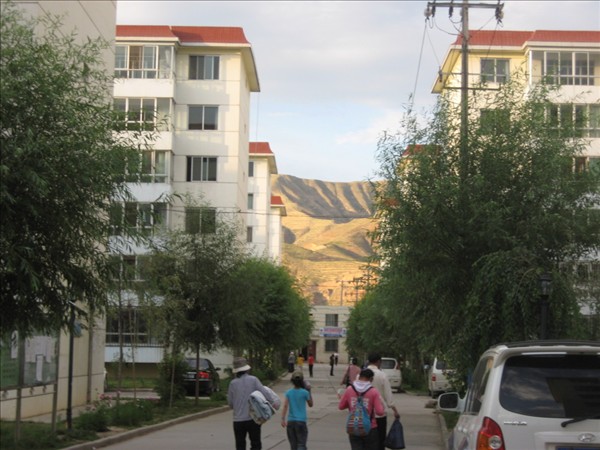
Conducting research into infant and childcare in a range of homes in western China in 2009
With my colleagues David Conradson, Stephen Healy, Gradon Diprose and Amanda Yates, I recently published an article for a special issue of the journal Cities. Here’s a plain language summary!
In the aftermath of devastating earthquakes in Christchurch, New Zealand gaps in the landscape emerged, and some new ideas and possibilities were able to take root and eventually thrive. Our article pulls together some of these interesting alternatives and uses the idea of ‘counter-city’ to describe what’s going on.
What is a counter-city?
When we think about cities, we often think of those in charge making decisions, sometimes influenced by the interests of big businesses and industriesto maintain a preference for capitalist modes of competitive development. But we might also think of the ‘counter-city’, thinking of everyday people, artists, Indigenous leaders, and communities who maintain more collaborative modes of urban change.
The counter-city isn’t a fully formed alternative to the regular city, and it doesn’t completely get rid of the business-as-usual ways of doing things. Instead, it’s a mix of innovative changes that invite us to think about a different kind of city. It’s a city where we explore new possibilities beyond the usual, always-capitalist city.
In our article, we discuss how changes and experiments in Christchurch, often led by community groups, transformed the city into a place where people could do things differently. This counter-city is a place where “hidden but now emerging ideas and ways of doing things” have turned into a “different way of doing things.”
If concrete is the usual infrastructure for the business-as-usual city, what is the infrastructure of the counter-city?
The counter-city is made up of structures, or “infrastructures,” that provide the foundation for how people organize and interact in their community. These infrastructures were shaped by the earthquakes and the changes they brought.
If we think of the counter-city within Christchurch, we think of the “commons” and “commoning” practices present, where people came together to share resources and spaces. While these were often temporary, they aimed to shift the management of resources and spaces from private responsibility to shared responsibility. They were led by the community, with people working together for the greater good. We can think of these as “social infrastructure”, relatively stable structures that provide a foundation for people in the counter-city.
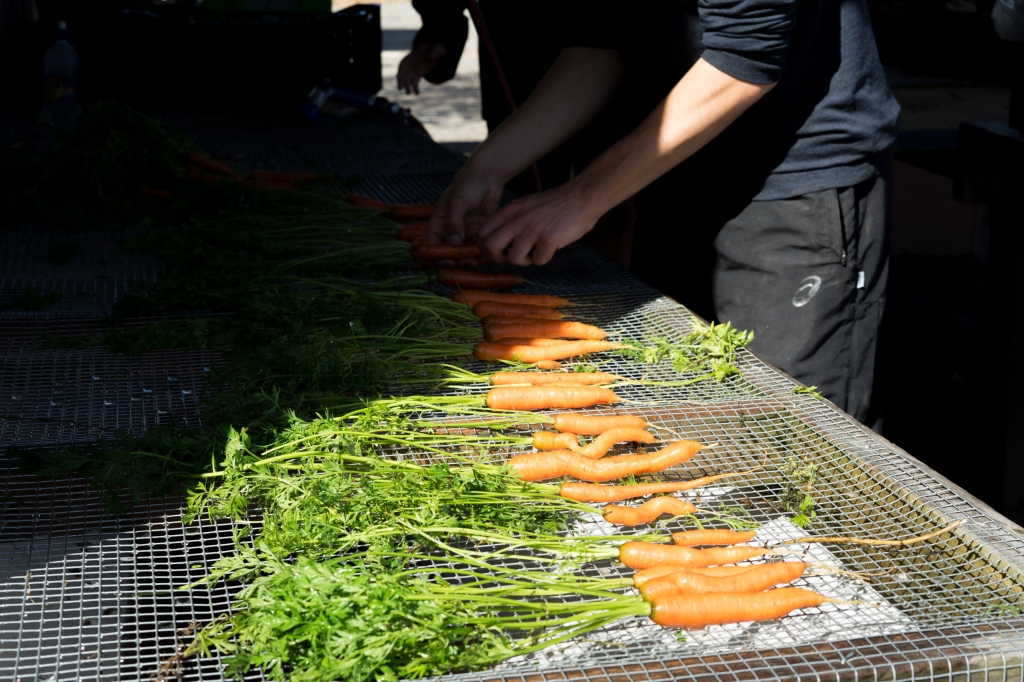
One such commons/infrastructure was an urban farm run by a social enterprise. In our work interviewing young people and staff on this urban farm, we found that in this counter-city, people also started to see themselves differently even if their commoning activities were temporary. They moved away from the idea of “everyone for themselves” and embraced a sense of caring for each other and the community. This way of thinking and being is what we call a “postcapitalist” subjectivity. In simple terms, it’s like moving from just thinking about money and profit to thinking about taking care of each other and the environment.
In the postcapitalist counter-city we are trying to describe, we called these people “commoners.” Commoners are individuals actively involved in caring for shared spaces, knowledge, or resources. They are at the heart of the counter-city’s transformation.
How do these infrastructures relate to people and the way they understand themselves?
In our article, we look at an urban farm in Christchurch. We explore how it became a “commons” where people and the environment came together as a kind of infrastructure of care. We’ll see how this farm changed young people’s way of thinking and acting, making them more focused on caring for the community and the environment. They spoke of a shift in their relationship with the world around them, encompassing everything from the land and garden to the larger ecological systems, the food system, the community, and their fellow workers. These transformations were collective, bearing a striking resemblance to the concept of “homines curans” – the collective caring subject – rather than the individualist, work-focused “homo economicus.” Another way to say this is that they became something more like “commoners” — people who care for commons together.
This journey through this example can help us understand what a counter-city might mean, and how the shift in how people see themselves and their community can shape the future of cities.
Drawing from postcapitalist theory, we explored the dynamics of commons as infrastructure, commoning, and subjectivity in this example. Encounters with more-than-human infrastucture/commons created conditions for collective caring urban subjects to emerge. The commons, often overlooked, can be viewed as an infrastructure of care for the counter-city. It sets the stage for the growth and flourishing of collective caring subjectivities.
Many thanks to ChatGPT, who helped to simplify some of our language in this summary.
The reference for the article: Dombroski, K., Conradson, D., Diprose, G., Healy, S., & Yates, A. (2023). Cultivating commoners: Infrastructures and subjectivities for a postcapitalist counter-city. Cities, 143, 104635. https://doi.org/10.1016/j.cities.2023.104635