Tag: students

  • Left behind or left out? A case study of economic subjectivities in Pātea

    Left behind or left out? A case study of economic subjectivities in Pātea

    Economic subjectivities in Pātea are not about catching up with capitalist norms but about sustaining inclusive, diverse economies rooted in cultural values and local agency. The town’s identity and resilience challenge dominant narratives of decline.

    Ben Lilly researched Pātea for his Master’s of Arts in Geography at Massey University in 2024. Over the last year, he has been working on turning his thesis findings into an article for New Zealand Geographer. This week it was published — you can read it here.

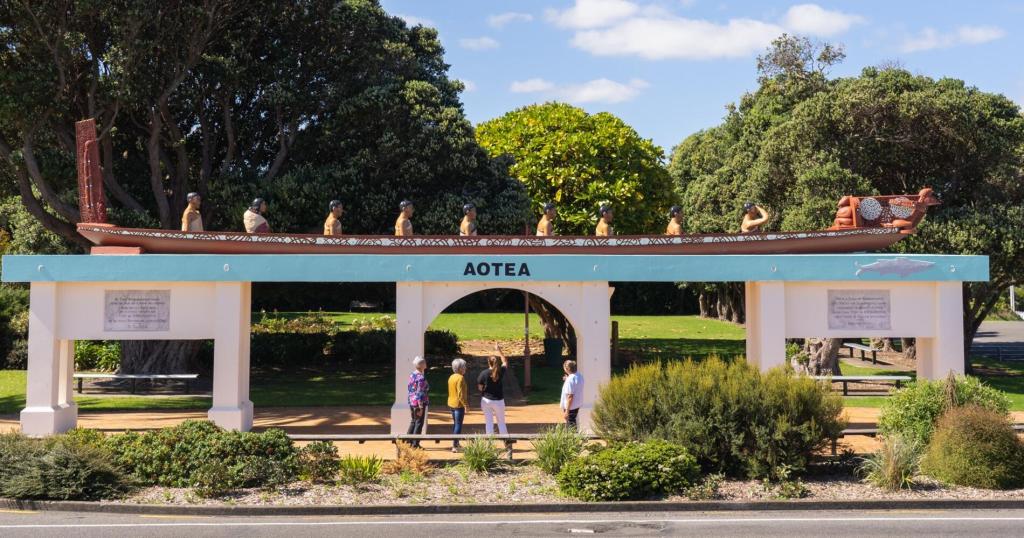
    Ben interviewed community leaders in Pātea showing them the results of a media analysis he had conducted and getting their thoughts on the way their town was represented. He also explored a range of ‘more-than-capitalist’ cultural and care practices that had enabled Pātea’s ongoing survivance. Many of us have seen this showcased in one of the nation’s informal anthems — the hit song “Poi E” released by Pātea Māori club in the 1980s.
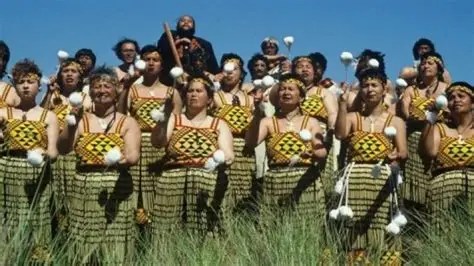
    Pātea Māori Club released the hit song Poi E in 1983, not long after the freezing works closed.

    Ben argues that when we label small towns as ‘left behind’, we buy into a linear trajectory of capitalist economic development where local autonomy and values are minimized. He suggests we shift to the language of ‘left out’, to highlight that the issue at hand is exclusion from decision-making rather than a failure for small towns to ‘keep up’. He provides examples of ways that Pātea residents have emphasized economic self-determination and autonomy after previous encounters with paternalistic industry relationships.

    Ben Lilly is PhD candidate at Waikato University. He is the co-chair of the Early Career Research Network of the New Zealand Geographical Society, and is a member of the Community Economies Research Network.
  • Introducing Ben — Researching changing economies in Taranaki

    Introducing Ben — Researching changing economies in Taranaki

    Ben is a co-funded Masters student studying economic change in the small town of Pātea, Taranaki. I’m part of his supervisory team and took a trip out to Pātea to meet up with Ben and have a look around South Taranaki.

    Tell us a bit about your background and how you got interested in economic geography

    I’m originally from North Taranaki, in fact I’m currently there now studying by distance. I went to study geography at Massey Manawatū straight out of school. I came to the topic because geography allows for academic diversity, being able to address topics and borrow ideas from other physical and social sciences. Economic geography is a particular interest as I can explore impacts of and solutions to capitalism’s flaws.

    What are you working on now?

    I’m currently completing my Masters’ thesis, where I am exploring people’s responses to change in the context of a small town, Pātea. This project includes a media analysis and semi-structured interviews with community leaders.

    What do you think the biggest challenges will be?

    One of the biggest challenges in my research is the interviewing. Having never done anything like this before, I have found it a difficult process to work through: planning interview questions, conducting interviews, and then discovering mistakes or oversights made, during transcription and analysis. It has definitely been one of those skills that can’t be just read about – it has to be continuously tried and improved for oneself, but I do think I am much better at interviews now than I was before my first.

    What are some of the surprising or interesting things you have discovered in your fieldwork so far?

    An interesting part of Pātea is the culture which stands in contrast to statistics and some media coverage. It has been evident with everybody I’ve talked to that they understand their community is sometimes called ‘lower socioeconomic’ by others. But they reject this as a sole identity and instead have embraced an engaging community lifestyle where local people and families can thrive peacefully and cooperatively. While there are certainly economic challenges, to identify a community like this only as ‘poor’ is to miss the point entirely. It is also clear that this identity is constantly shaped by the community leaders I talked to, who are passionate about their place, and inspire others to share in that passion.

    Ben Lily is researching people’s responses to change in Pātea as part of a Master’s project funded by the John McArthur Scholarship in Geography