Tag: announcements

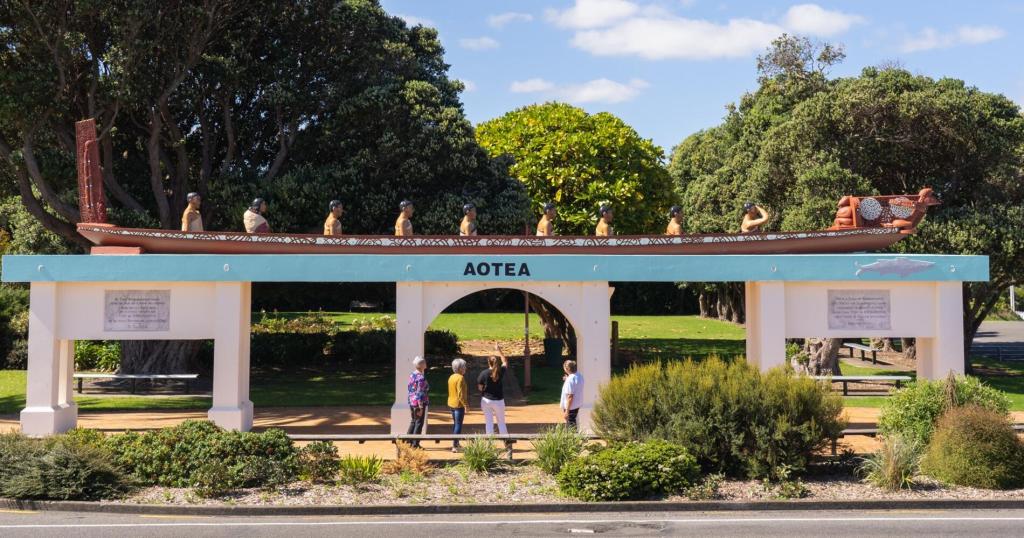
  • Left behind or left out? A case study of economic subjectivities in Pātea

    Left behind or left out? A case study of economic subjectivities in Pātea

    Economic subjectivities in Pātea are not about catching up with capitalist norms but about sustaining inclusive, diverse economies rooted in cultural values and local agency. The town’s identity and resilience challenge dominant narratives of decline.

    Ben Lilly researched Pātea for his Master’s of Arts in Geography at Massey University in 2024. Over the last year, he has been working on turning his thesis findings into an article for New Zealand Geographer. This week it was published — you can read it here.

    Ben interviewed community leaders in Pātea showing them the results of a media analysis he had conducted and getting their thoughts on the way their town was represented. He also explored a range of ‘more-than-capitalist’ cultural and care practices that had enabled Pātea’s ongoing survivance. Many of us have seen this showcased in one of the nation’s informal anthems — the hit song “Poi E” released by Pātea Māori club in the 1980s.

    Pātea Māori Club released the hit song Poi E in 1983, not long after the freezing works closed.

    Ben argues that when we label small towns as ‘left behind’, we buy into a linear trajectory of capitalist economic development where local autonomy and values are minimized. He suggests we shift to the language of ‘left out’, to highlight that the issue at hand is exclusion from decision-making rather than a failure for small towns to ‘keep up’. He provides examples of ways that Pātea residents have emphasized economic self-determination and autonomy after previous encounters with paternalistic industry relationships.

    Ben Lilly is PhD candidate at Waikato University. He is the co-chair of the Early Career Research Network of the New Zealand Geographical Society, and is a member of the Community Economies Research Network.

  • 🌿 Transitions in Action: A Field Guide to the Wellington Region’s Emerging Future

    🌿 Transitions in Action: A Field Guide to the Wellington Region’s Emerging Future

    We wrote this guide because we could feel something stirring across the region.

    Recently I was part of a project documenting awesome projects in the Greater Wellington Region. In our work as researchers, community collaborators, planners, and advocates, we kept coming across people doing the quiet, determined, and deeply hopeful work of transition. These included composters and kai growers, local energy innovators, housing cooperatives, council staffers working behind the scenes, artists hosting place-based experiments, iwi-led projects regenerating whenua. As someone born in Wellington and who grew up in Wairarapa, I was really keen to connect with projects in this region but also to connect them with each other!

    Often, these efforts were siloed or invisible to each other. But taken together, they point to something larger: an emerging transition infrastructure already in motion. Transitions in Action: An Urban and Regional Transitions Guide for Te Upoko o te Ika / Wellington is our attempt to document, honour, and connect these efforts.


    What the guide is (and isn’t)

    It’s not a plan. It’s not a blueprint. We explored a few different ideas for titles (I suggested ‘look book’), but it was Amanda that came up with the idea of a ‘field guide’.

    So it’s a field guide—something that invites attention, orientation, and learning. It draws on interviews, workshops, and mapping work to identify over 50 projects across six transition domains: housing, energy, mobility, ecosystems, economy, and community.

    To me, what is important is that these are not hypothetical futures—they’re already underway. And they’re reshaping our shared sense of what’s possible here.

    What we’ve learned

    Writing this guide affirmed a few things we suspected, and clarified many things we hadn’t yet articulated. A few key insights:

    • Transitions are already happening, but they’re uneven, precarious, and sometimes invisible to themselves.
    • Place matters. Transition in Wellington looks different than in other regions—it’s shaped by wind, faultlines, iwi relationships, governance structures, harbour edges, and long-standing networks of resistance and repair.
    • Community and institutional work are entangled. The most promising initiatives weren’t either grassroots or top-down—they blurred those lines.
    • Transitions need time and infrastructure. Many of these projects operate on goodwill and temporary resourcefulness. Without scaffolding—funding, policy shifts, relational infrastructure—they risk burning out or being co-opted.

    Who we wrote it for

    We wrote this guide for people already doing the work, to help them find each other. It was so awesome to see a range of the people who feature in the book turn up to the launches and meet each other!

    We also wrote it for funders, public servants, and elected officials—those who say they want climate action or community wellbeing, but often don’t know where to start. The guide shows what’s already in motion, what’s needed, and where policy or funding could shift to support grassroots capacity without overriding it. We have had such a great response from local and central government — with Masterton councillor Stella Lennox, Wellington City Councillor Yadana Saw, MPs Celia Wade-Brown and Tamatha Paul appearing at our two launches!

    Finally, we wrote it for ourselves. To better understand the ecology of transition in our home region. To see the patterns, the synergies, the tensions, and the possibilities.

    What’s next?

    Our hope is that the guide becomes a resource for conversation and connection. That it helps to legitimise and amplify the work already being done. And that it invites deeper reflection on what kinds of transitions we’re part of—and for whom.

    We’re already hearing from local councils, community groups, and educators who want to use it in their work. And we’re in ongoing conversations with collaborators about how this guide might seed similar efforts in other regions.


    You can download the full guide here:
    📘 Transitions in Action (PDF)

    You can find out more about the authors here:

    Amanda Yates | Gradon Diprose | Kelly Dombroski | Thomas Nash

    The book was launched in Wellington in March and in Wairarapa in May

  • Introducing new team member Kelsi – championing restorative justice

    Introducing new team member Kelsi – championing restorative justice

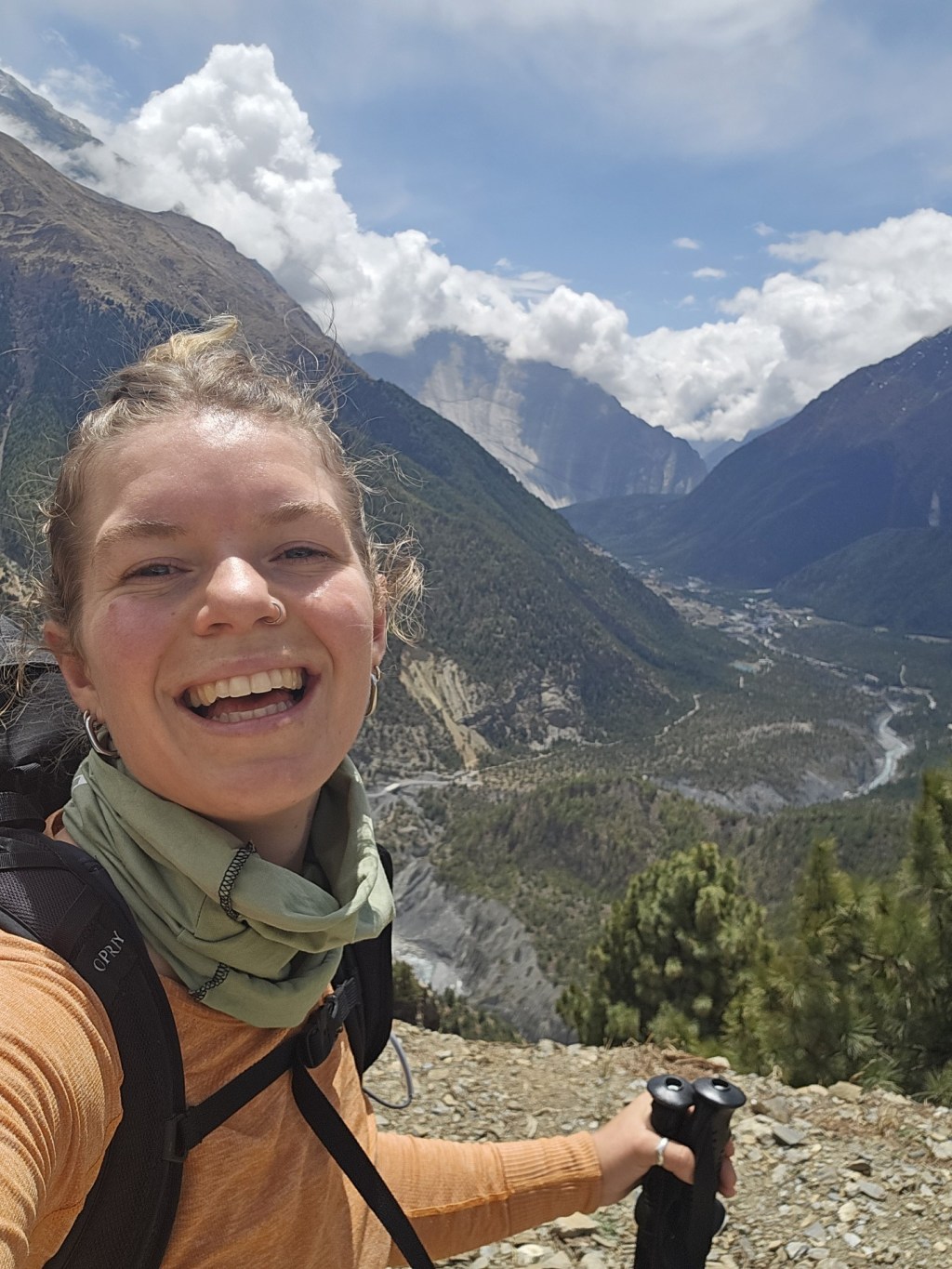
    The transitioning to caring economies project recently awarded a scholarship to Kelsi Henderson to study a Masters in Arts in Geography at Massey University. She will spend the first semester doing coursework, then develop a research proposal that aligns with the programme to complete between November 2025 and October 2026. Kelly caught up with Kelsi to find out a bit more about what drives her.


    Ko Takitimu te maunga te ru nei tōku ngākau, 

    Ko Mokoreta te awa a māhea ahu māharara, 

    Nō Aerana, Kōtorana tōku tīpuna, 

    Nō Murihiku, Ōtautahi e tipu aku nei, 

    Ko Henderson, O’Neill ngā ingoa whānau, 

    Ko Kelsi Henderson tōku ingoa

    Born and raised between Southland and Christchurch, Kelsi completed her undergrad at the University of Canterbury while working as a youth worker. She explains that this was a role she “somewhat fell into following the Canterbury earthquakes”. She studied a co-joint LLB/BA (sociology and geography). Following this, she worked as a solicitor in Te Whanganui-a-Tara before taking a role as Specialist Facilitator (Restorative Justice and Te Pae Oranga) in Waihōpai. 

    Both within and outside of paid mahi, Kelsi finds herself seeking ways to develop, refine, and express her values and understanding of the world and those around her. Kelsi says that

    This involves voluntary mahi, involvement with intentional community housing, and a rich family life where I am proud to have become a guardian of one of my epic nieces.

    She refills through time outside, including a recent stint as a hiking guide throughout Aotearoa. Kelsi says

    I’m excited to join the Transitioning to Caring Economies team and continue along this path and to contribute to such an exciting project exploring possibility and opportunity for social and economic change, prioritising the fullness of well-being. 

    We look forward to seeing where Kelsi takes her scholarship over the next year!

  • PhD Scholarship awarded – introducing Swarnima Kriti

    PhD Scholarship awarded – introducing Swarnima Kriti

    Great news! We are now able to confirm the PhD scholarship in Transitioning to caring economies has been awarded to Swarnima Kriti.

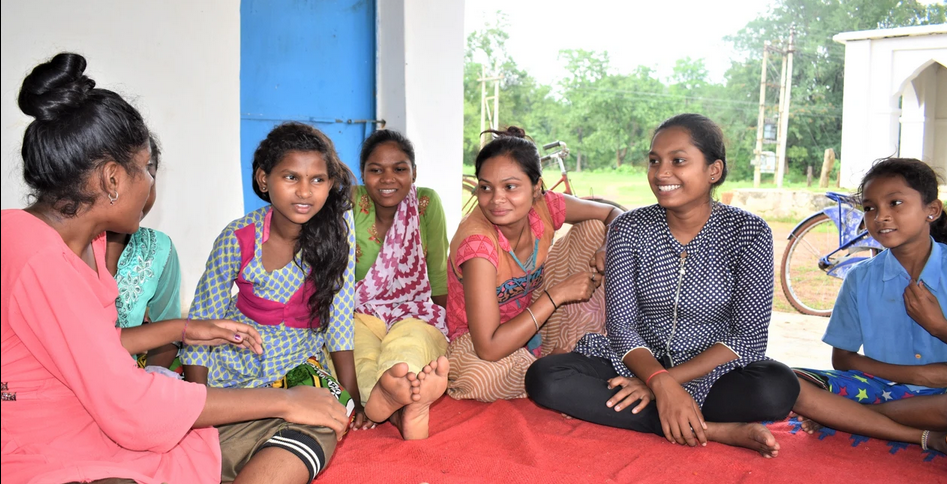
    Swarnima is an action researcher in the central Indian state of Chhattisgarh. She has both lived and worked in a small Indigenous village with a group of young women interested in questions of gender, development and ecology. Together, Swarnima and the other young women have set up a cooperative called Chinhari: The Young India (www.chinhari.co.in). Swarnima has completed an MPhil in Development Practice, and published some articles. Her latest published article is “Hegel and India” at The GCAS Review. 

    Swarnima will join the caring economies project and be based at Massey Palmerston North, while living in Porirua and back in Chhattisgarh for parts of the PhD project. Her project includes enabling a creative and constructive exchange of learning between communities doing community-based economic innovation in India and New Zealand. Our research partners in Porirua are Te Hiko centre for economic innovation. I asked Swarnima a couple of questions in the lead-up to her big shift to Aotearoa New Zealand.

    What attracted you to the Transitioning to caring economies project? 

    The Transitioning to caring economies project attracted me because of two reasons. One, it gave me the opportunity to learn about collective economic subjects, their actions and institutions. And two, it focused on “writing rights” i.e. writing about efforts communities put into finding sustainable ways of life than  “writing wrongs”. These learnings become important for action researchers like me to create a confluence of alternatives nurturing post capitalist practices.

    What do you think the biggest challenges will be in completing your PhD at Massey?

    I believe my biggest challenge in completing this PhD would be my field work in New Zealand, especially building a relationship with communities there. My work in the past has been largely based on my strong relationships with the community. It may be challenging to juggle between understanding the community, living with them, creating relationships and minimizing the cultural gap. 

    We look forward to having Swarnima arrive and join us at Massey and the Community Economies Research Network NZ, beginning in November 2023!

    Swarnima is an accomplished action researcher interested in community-led economic innovation.
  • Masters scholarship awarded

    It is my great pleasure to introduce Daena Moller, who was awarded with a scholarship in the Masters in Sustainable Development Goals programme in the School of People, Environment and Planning at Massey University. She is an incredible wahine toa who leads in her communities in caring and innovative ways. As part of her scholarship, she will spend time as an intern on the Transitioning to Caring Economies Project in 2024.

    I am passionate about caring economies and doing my part to make a difference in Aotearoa – one individual and whānau at a time.

    -Daena Moller

    Kia ora koutou, ko Daena Moller tōku ingoa. He uri nō Ngāti Maniapoto, Tainui, Ngāti Rangatahi hoki. 

    I am a māmā of 6 tamariki and it is in the nurturing and raising of my whānau that I am passionate about caring economies and doing my part to make a difference in Aotearoa – one individual and whānau at a time. I am humbled to have the following opportunities to serve my iwi, community & Aotearoa:

    • In Tāmaki Makaurau I am a founding trustee of Takiwānaga ki Tāmaki Makaurau, a kaupapa Māori charitable trust created to support whānau with Takiwātanga (Autism Spectrum Disorder) in a holistic and mana-enhancing way. Through lived experience of the challenges and barriers whānau face, our purpose is to understand, support, inform and advocate for our member’s needs. We organise disability friendly activities as well that encourage the whole whānau to attend and have fun together. This group is not exclusive to Māori but open to all families who are interested in a holistic and whānau oriented approach.
    • Tāngata Turi (Māori deaf): This project listens to the voice of Māori deaf through Māori interpreters who express their urgent desire to have their aims and aspirations heard and realised. This work involves advocacy and cross-sector collaboration with tāngata turi fully involved to address the challenges and barriers they experience.
    • Ngāti Rangatahi Whanaunga Association: This project identifies and repairs housing of highest concern in Ngāti Rangtahi rohe (area) and makes improvements to bring it up to a quality livable standard. A gathering of whakapapa (genealogy) and pūrākau (stories) are captured and stored. We are establishing an iwi database and communicating with Ngāti Rangatahi whānau worldwide to keep everyone connected..
    • Te Kāhui Manukura o Kai Ora (Māori Dietitian rōpū of Aotearoa): Through this kaupapa I support Māori dietitians and dietetic students throughout Aotearoa to fulfill their aspirations. This includes building a support network and advocating for culturally safe training programmes and workplaces for Māori dietitians to thrive. In doing so, our members can better serve whānau in their communities to have good health and wellbeing through kai (food). 
    • Aotearoa Sustainable Development Goals Alliance: This organisation has been established in response to a ‘Call to Action’ to capture the national response to the sustainable development goals (SDG). I support this organisation to collaborate with the tāngata whenua, community and voluntary sector, business, academia, local and central government to promote a positive response to the SDGs in Aotearoa. This is no small task, but necessary as we all work together for a better and sustainable country to live.

    I am very grateful to be a recipient of a scholarship which has allowed me to study a Masters of Sustainable Development Goals at Massey University. This is a wonderful opportunity for me to learn and then implement into all aspects of my mahi.

    Daena is a community activist with passion for sustainability and wellbeing.
  • Recruiting a PhD student interested in transitioning to caring economies

    Recruiting a PhD student interested in transitioning to caring economies

    One of the cool things about getting some funding for this project is the ability to offer a scholarship! You can read more about my advertised scholarship here, including how to apply. I’m keen for people to bring their own passions, interests and communities to the project.

    The whole process highlighted how our economies are in dire need of transition, however. The funding was approved in 2021, and since then the PhD scholarship rates were increased (yay!), but I was not allowed to increase the scholarship rate for the one I am offering (boo!). However, I have managed to ring-fence some funding for PhD fieldwork, including international travel if appropriate, and a paid part-time research assistant job on this project. While this is still not ideal, it does mean that any part-time work the PhD student is doing will be relevant to their PhD – rather than going to work in a petrol station or supermarket or work in an unrelated course tutoring.

    I guess this also highlights the things that we can and do already do to create opportunities for care ‘in the meantime’. And how much we need to make this the norm, if PhD students are able to survive on more than two-minute noodles. If you would like to find out more about the scholarship, please get in touch via my Massey email.

    Photo by Ekrulila on Pexels.com