Tag: writing

  • How to move up the waste hierarchy

    How to move up the waste hierarchy

    Our Marsden team (Reduce, Reuse, Repair) published a new report about how to move up the waste hierarchy. It was authored by Gradon Diprose (Bioeconomy Science Institute) and Dorte Wray (Zero Waste Aotearoa).

    Guest post by Dr Gradon Diprose, Bioeconomy Science Institute.

    Why we wrote this report

    We know there are huge problems with waste. For example, New Zealand produces a lot of waste compared to other OECD countries, and our central and local government’s focus is on managing waste, not preventing it. While the waste hierarchy has been around for years it is still not reflected in many government’s operational policies or actual investment. This is partly because the waste hierarchy conflicts with many countries GDP growth-oriented economic goals, and the vested interests of powerful industries. The key question for us is how to encourage social and political shifts towards waste prevention given these challenges.

    For this report, we researched what collective practices help communities and businesses to prevent waste and build the wider social and political support for waste prevention more broadly. We interviewed people from businesses, local government, and non-governmental organisations and civil society groups who work on waste prevention and supplemented this with a literature review. We asked participants what had practically helped them, their businesses, and wider communities shift from waste management to waste prevention. We also asked participants how they did this. For example, what kinds of language they use, and what they invest in and prioritise.

    What is in the report (and isn’t)

    The report identifies four interconnected collective practices that help build the social and political pressure to make waste prevention a priority.

    The report is not about how to manage waste through individual behaviour change. For example, how to recycle better, how to address problem waste streams, or the best waste disposal options.  

    What we learned through our research

    Our participants and the research literature highlight that governments need to set new rules like mandatory product stewardship, extended producer responsibility and right to repair to shift economic systems towards waste prevention. The four interconnected collective practices that help build the social and political pressure for this new legislation are:

    • Supporting collectives and networks
    • Investing in place-based initiatives
    • Using data to demonstrate impact
    • Using language strategically to frame change

    Who is this report for?

    We wrote this report for those people and organisations already taking action on waste prevention, and for those who are concerned and want to take action. We also wrote it for funders, public servants and elected officials who might want to support waste prevention and wider systems change but don’t know where to start. The report helps to show what is already in motion and what is working. 

    What’s next?

    We will be running cooperative inquiry groups (a kind of action research approach using focus groups) with New Zealanders who are interested in waste prevention. These groups will explore people’s everyday practical actions and deeper meanings and emotions associated with waste prevention. Shifting towards waste prevention will require significant and deep social changes. These cooperative enquiry groups will explore some of these shifts. Such as how people come to desire consuming less (reduce), how the negotiate their relationships with others in the process.

    You can read and download the full report below:

  • Celebrating a first draft of a new book

    Celebrating a first draft of a new book

    Early on Saturday morning, before the family awoke, I typed the last few paragraphs… yes! A new book is en route! It’s working title is Postcapitalist Economies of Care.

    The book argues that care is a powerful force that can be invested in transforming our economies, developing a methodology for inventorying care surplus flows — from generation, to appropriation and distribution. It asks how different patterns of care surplus flow create space for different kinds of transformations, including space for different kinds of actors in transformative work. Care can be part of maintaining capitalism, we know that, but it also contributes to survivance of noncapitalist ways of being, and can even be collectivised for more widespread transformation.

    Of course, I subscribe to the ‘shitty first draft’ school of writing, which means that there is editing to do now before it is ready for widespread sharing. But since I have worked with a book mentor all the way through, I have had regular light edits, conversations about direction, and feedback to guide me. I feel like it is in pretty good shape. Maybe not even a ‘shitty’ first draft, but a reasonably readable first draft?

    One can always hope.

    But what comes next? Well, I have put together an ambitious edit schedule, hoping to get the book manuscript and proposal off to an appropriate publisher before the end of the year. I am also ‘road testing’ chapters through presentations over the coming months at a few conferences and in the Political Economy Research Centre’s seminar series on hope. This helps me see whether the ideas are landing, and what adjustments might be needed for different audiences.

    As I edit the chapters, I will also have the proposal open and be editing the proposal to fit what I actually ended up doing in the chapters (slightly different from what I initially proposed). For this book, I have decided to submit proposal and manuscript together. Usually, I sign a contract before I begin serious work on the book, but this time, I was not yet sure exactly where I wanted to publish. So I decided to write the book I want to write, with five or six possibly publishers in mind, then reassess when I got through the first draft.

    What do I do when I am editing the first draft? For me, it’s usually about reducing length and increasing clarity, as well as keeping an eye on transitions and coherence. Here’s my plan for this set of revisions:

    1. read the introduction and conclusion against each other and edit to increase coherence.
    2. Rewrite the rationale section of the proposal.
    3. Work my way backwards through the chapters. I like to do it backwards, so I can make sure the preceding chapter sets up what is required in the argument for the following chapter to work. When I do it forwards, I am mainly focused on flow. For argument, I feel like it works better to go backwards!
    4. Rewrite chapter summaries in proposal as I go.
    5. Print out the whole thing and read through for copy and line edit.
    6. Enter changes and update proposal.
    7. Find a couple of extra pre-readers.
    8. Edit according to their feedback
    9. Start submitting to publishers.

    Watch this space for links to talks, pre-reading opportunities and general reflection on the book’s argument and progress.

  • The Desire to Write Grows with Writing

    The Desire to Write Grows with Writing

    “The desire to write grows with writing” is a quote attributed to Desiderius Erasmus of Rotterdam, a prolific writer, theologian and humanist in the 15th Century. I have not been able to find the source of the quote, but it continues to circulate because it seems like the truth of it is widely recognised by writers.

    It has been on my mind lately as I have committed to writing 250 words a day on a new book, tentatively titled Postcapitalist Economies of Care. The 250 words started out as difficult — I needed to figure out a structure, a point, then write within that structure and point, which usually required some reading. But as I have gone on, for 3 weeks now, it has become easier. In fact, I come to sit in my home study in both early morning and late afternoon in the weekend just for the pure pleasure of it, even if I have already managed the 250 words.

    It’s a strange experience really. I think the desire to write grows with writing as you start to figure out what you are trying to say then find the time and the way to say it. Right now, I’m only halfway through my chapter structure, but already at my word count for it — what that means is that I’m quite motivated to get back to it, get on with the next section and get to the end of the piece of work so I can then return to edit and sharpen.

    I would also add that for me, the desire to write also grows with reading. When I read books, especially, I feel quite motivated to interact with their arguments and figure out how they differ or complement what I am thinking.

    Finally, I’ve been working on a variety of interesting projects for a decade, and working on a new book is an opportunity to reflect on what they all mean and how they all help me consider my broader project of transitioning to postcapitalist economies of care. Watch this space!

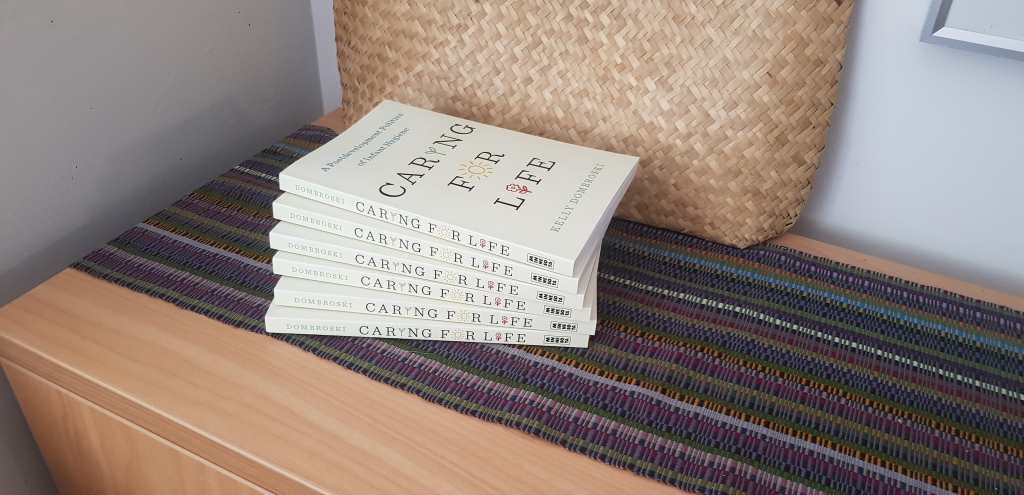
  • Caring for Life: New book release challenges us to learn from places often considered ‘undeveloped’

    Caring for Life: New book release challenges us to learn from places often considered ‘undeveloped’

    In February 2006, 6 months pregnant, I left Palmerston North NZ for Canberra, Australia to pursue a PhD with Katherine Gibson (of JK Gibson-Graham). Thus began a journey of research and learning in Australia, China, Aotearoa NZ, through the birth of four children and homes in five different cities. And in February 2024, some 18 years later, I celebrate the monograph that emerged from all that work!

    When I went into the project 18 years ago, I was really interested in how the processes of Westernisation and globalisation were playing out unevenly around the world. I was particularly interested in pockets of resistance to corporate globalisation. In my fieldwork in the far west of China in the province of Qinghai, I studied the relationship between the local nappy-free infant hygiene practice, space, place and cultures of health and wellbeing. During that time, I discovered a whole online community of westerners also trying to learn the nappy-free infant hygiene practice but without the support of their local environments or cultures. In both groups, there was a resistance to the use of disposable nappies, and the deliberate cultivation of embodied practices of hygiene that required less material (and plastic) stuff.

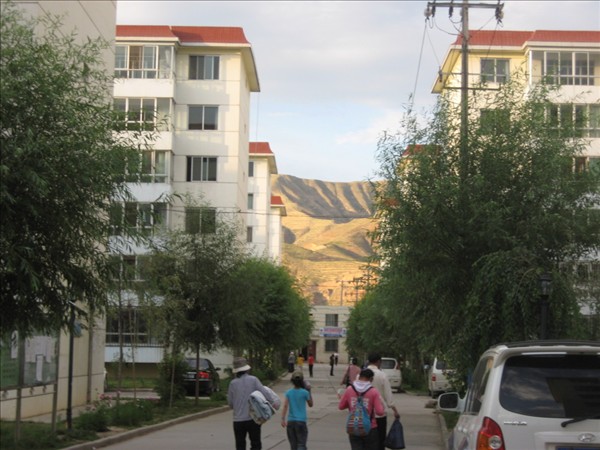
    Fieldwork was conducted in the city of Xining, in Qinghai province in the far west of China

    Hygiene is social, material and spatial

    As a book project, Caring for Life: A postdevelopment politics of hygiene speaks more to our post-pandemic hygienes, as well as the broader question of how does social change happen. In the revisions made for the monograph, I significantly rewrote and retheorised most of the material to build an argument about hygiene assemblages.

    Hygiene assemblages is a term referring to the social, material, cultural and spatial practices that come together to keep hygiene. In the Qinghai examples, these assemblages gathered around strong social and spatial practices — caregivers learned the specific signals for baby’s wee and poop, and held them out over appropriate places — wee against a tree, on the concrete, on the tiles, or over a drain. Poop over a newspaper, a basin, a toilet or a pile of ash from the fire (in rural areas). But they worked to keep hygiene nevertheless. In the Australian examples, caregivers were trying to learn these signals too, but with less historical and cultural knowledge to draw on. Their assemblages gathered around the material aspects of the practice: potties, bags, nappies, wipes, toilets, containers and more.

    Of course, all hygiene assemblages have both social and material practices, and all have a spatiality and cultural component. What I was interested in was the possibilities of learning and assembling new hygiene practices and assemblages through cross-cultural learning. Could these practices from the far west of China influence hygiene assemblages in Aotearoa, Australia and other places in the West? In asking this, I developing thinking around hybrid research collectives to argue that the early adopters of ‘elimination communication’ (as the nappy-free hygiene practice was called) were researchers, experimenting and documenting their hygiene assemblages in ways that made it more possible for others to pick up the practice.

    It has been interesting to work on the book over such a long period: things that were not normal 18 years ago have become normalised. During this time, elimination communication has become more mainsteam, as have other alternative hygiene practices such as using menstrual cups, reusable pads or period panties, and a whole range of modern cloth nappies. We have also had a global pandemic where the first response was not really medical, but social — in the form of social distancing and changing behaviours and habits before vaccines were produced.

    Photo by Eric Lafforgue, from Flickr

    What does Caring for life have to say about transition?

    So what does the book tell us about transitioning to caring economies? Here’s three thoughts on that:

    1. Transition and social change is material, social and spatial. It’s not about individuals, although individuals and their behaviours matter. It’s about the broader assemblage of these materialities, socialities and spatialities.
    2. Passionate collectives of individuals experimenting with different material, social and spatial arrangements can spark and seed change. In the area of economic change, this means paying attention to what collectives of community groups are doing — degrowthers, community economy organisations, artist collectives, Indigenous economies, regional and local economies and more. It’s not that these experiments have to be scaled up ‘as is’, but that they produce important knowledge that can inform change.
    3. We can and should learn from places that are considered ‘less-developed’, ‘out of the way’ or ‘undeveloped’. For it is in these places where different diverse forms of cultural, social, material and spatial arrangements can be found that might be better adapted for transition.

    If you are interested in taking a look at the book, see here.

    I’m also available to give talks on the book this year, just get in touch!

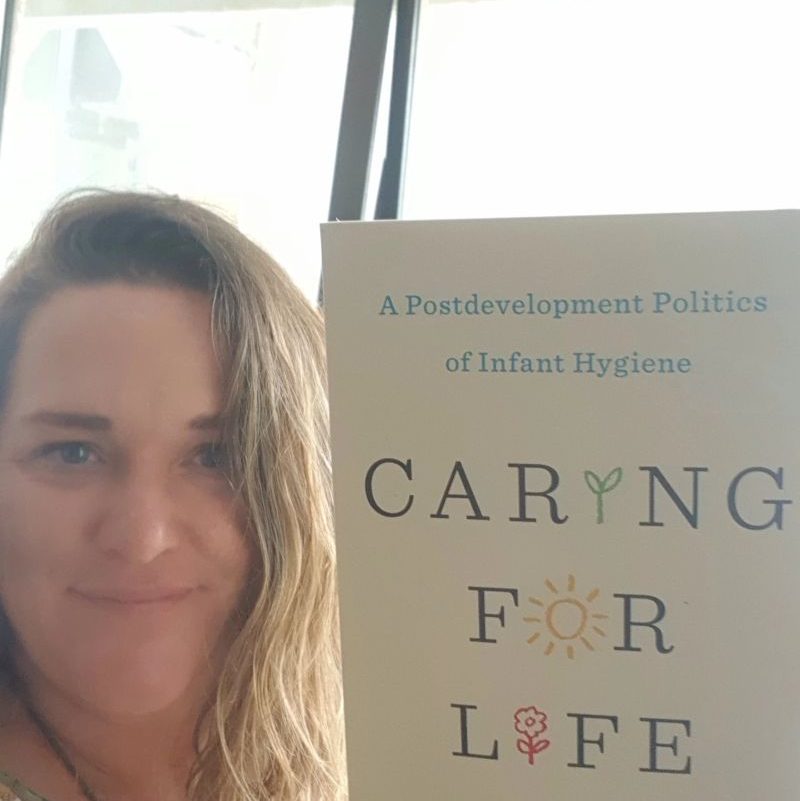
    The author holds up a copy of the book Caring for Life: a postdevelopment politics of hygiene