The most recent installment in the podcast series with Tara Brabazon is now available. This was super fun! We discuss the paper I co-wrote with colleagues, published 2023, entitled “Cultivating commoners: Infrastructures and subjectivities for a postcapitalist counter-city”. We discuss the collaboration with Christchurch urban farm Cultivate, the idea of subjectivity and how being outdoors might help shift subjectivities.
Cite the article as: Dombroski, K., Conradson, D., Diprose, G., Healy, S., & Yates, A. (2023). Cultivating commoners: Infrastructures and subjectivities for a postcapitalist counter-city. Cities, 143, 104635. https://doi.org/10.1016/j.cities.2023.104635
Early on Saturday morning, before the family awoke, I typed the last few paragraphs… yes! A new book is en route! It’s working title is Postcapitalist Economies of Care.
The book argues that care is a powerful force that can be invested in transforming our economies, developing a methodology for inventorying care surplus flows — from generation, to appropriation and distribution. It asks how different patterns of care surplus flow create space for different kinds of transformations, including space for different kinds of actors in transformative work. Care can be part of maintaining capitalism, we know that, but it also contributes to survivance of noncapitalist ways of being, and can even be collectivised for more widespread transformation.
Of course, I subscribe to the ‘shitty first draft’ school of writing, which means that there is editing to do now before it is ready for widespread sharing. But since I have worked with a book mentor all the way through, I have had regular light edits, conversations about direction, and feedback to guide me. I feel like it is in pretty good shape. Maybe not even a ‘shitty’ first draft, but a reasonably readable first draft?
One can always hope.
But what comes next? Well, I have put together an ambitious edit schedule, hoping to get the book manuscript and proposal off to an appropriate publisher before the end of the year. I am also ‘road testing’ chapters through presentations over the coming months at a few conferences and in the Political Economy Research Centre’s seminar series on hope. This helps me see whether the ideas are landing, and what adjustments might be needed for different audiences.
As I edit the chapters, I will also have the proposal open and be editing the proposal to fit what I actually ended up doing in the chapters (slightly different from what I initially proposed). For this book, I have decided to submit proposal and manuscript together. Usually, I sign a contract before I begin serious work on the book, but this time, I was not yet sure exactly where I wanted to publish. So I decided to write the book I want to write, with five or six possibly publishers in mind, then reassess when I got through the first draft.
What do I do when I am editing the first draft? For me, it’s usually about reducing length and increasing clarity, as well as keeping an eye on transitions and coherence. Here’s my plan for this set of revisions:
read the introduction and conclusion against each other and edit to increase coherence.
Rewrite the rationale section of the proposal.
Work my way backwards through the chapters. I like to do it backwards, so I can make sure the preceding chapter sets up what is required in the argument for the following chapter to work. When I do it forwards, I am mainly focused on flow. For argument, I feel like it works better to go backwards!
Rewrite chapter summaries in proposal as I go.
Print out the whole thing and read through for copy and line edit.
Enter changes and update proposal.
Find a couple of extra pre-readers.
Edit according to their feedback
Start submitting to publishers.
Watch this space for links to talks, pre-reading opportunities and general reflection on the book’s argument and progress.
Once again, I had the great privilege of being able to discuss a piece of my work with Professor Tara Brabazon on this bespoke podcast leading up to my book Postcapitalist Economies of Care!
Cite the paper: Dombroski, K. 2024. “Communities of Care in the Nitty-Gritty of Commons-Work.” Azimuth International Journal of Philosophy XII (24): 24-48.
It was an immense privilege to record this first podcast in an ongoing collaboration with Professor Tara Brabazon in the build up to my new book on postcapitalist economies of care. This first episode revisits a book chapter from 2015, where I first began to engage with the concepts of life’s work, care, social reproduction and postcapitalist possibilities. Check it out here, on Youtube, or wherever you get your podcasts.
With my colleagues David Conradson, Stephen Healy, Gradon Diprose and Amanda Yates, I recently published an article for a special issue of the journal Cities. Here’s a plain language summary!
In the aftermath of devastating earthquakes in Christchurch, New Zealand gaps in the landscape emerged, and some new ideas and possibilities were able to take root and eventually thrive. Our article pulls together some of these interesting alternatives and uses the idea of ‘counter-city’ to describe what’s going on.
What is a counter-city?
When we think about cities, we often think of those in charge making decisions, sometimes influenced by the interests of big businesses and industriesto maintain a preference for capitalist modes of competitive development. But we might also think of the ‘counter-city’, thinking of everyday people, artists, Indigenous leaders, and communities who maintain more collaborative modes of urban change.
The counter-city isn’t a fully formed alternative to the regular city, and it doesn’t completely get rid of the business-as-usual ways of doing things. Instead, it’s a mix of innovative changes that invite us to think about a different kind of city. It’s a city where we explore new possibilities beyond the usual, always-capitalist city.
In our article, we discuss how changes and experiments in Christchurch, often led by community groups, transformed the city into a place where people could do things differently. This counter-city is a place where “hidden but now emerging ideas and ways of doing things” have turned into a “different way of doing things.”
If concrete is the usual infrastructure for the business-as-usual city, what is the infrastructure of the counter-city?
The counter-city is made up of structures, or “infrastructures,” that provide the foundation for how people organize and interact in their community. These infrastructures were shaped by the earthquakes and the changes they brought.
If we think of the counter-city within Christchurch, we think of the “commons” and “commoning” practices present, where people came together to share resources and spaces. While these were often temporary, they aimed to shift the management of resources and spaces from private responsibility to shared responsibility. They were led by the community, with people working together for the greater good. We can think of these as “social infrastructure”, relatively stable structures that provide a foundation for people in the counter-city.
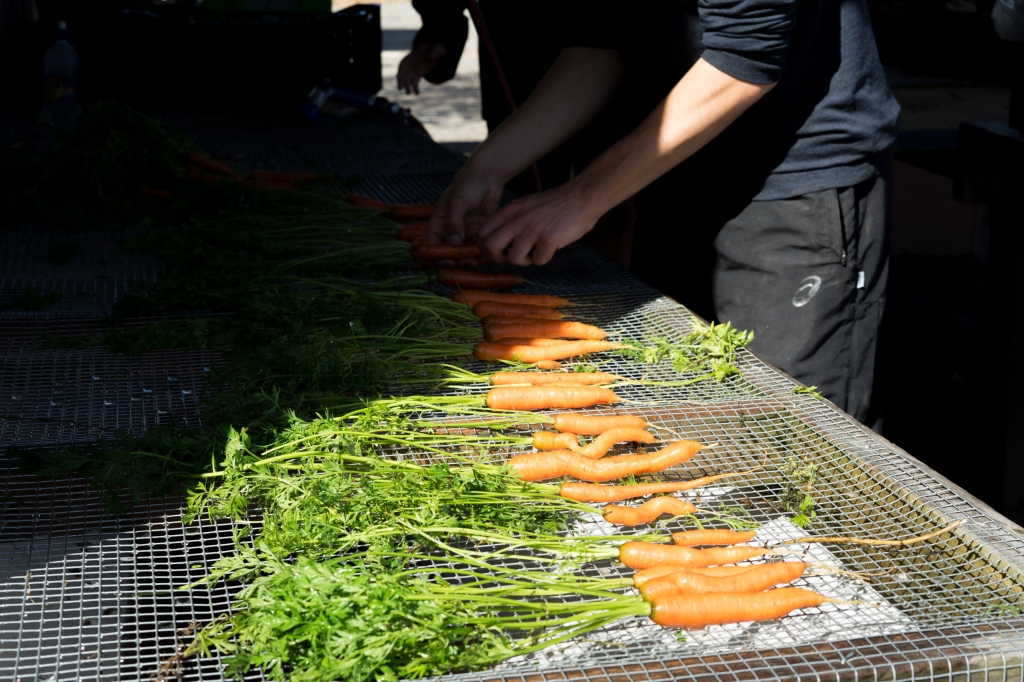
One such commons/infrastructure was an urban farm run by a social enterprise. In our work interviewing young people and staff on this urban farm, we found that in this counter-city, people also started to see themselves differently even if their commoning activities were temporary. They moved away from the idea of “everyone for themselves” and embraced a sense of caring for each other and the community. This way of thinking and being is what we call a “postcapitalist” subjectivity. In simple terms, it’s like moving from just thinking about money and profit to thinking about taking care of each other and the environment.
In the postcapitalist counter-city we are trying to describe, we called these people “commoners.” Commoners are individuals actively involved in caring for shared spaces, knowledge, or resources. They are at the heart of the counter-city’s transformation.
How do these infrastructures relate to people and the way they understand themselves?
In our article, we look at an urban farm in Christchurch. We explore how it became a “commons” where people and the environment came together as a kind of infrastructure of care. We’ll see how this farm changed young people’s way of thinking and acting, making them more focused on caring for the community and the environment. They spoke of a shift in their relationship with the world around them, encompassing everything from the land and garden to the larger ecological systems, the food system, the community, and their fellow workers. These transformations were collective, bearing a striking resemblance to the concept of “homines curans” – the collective caring subject – rather than the individualist, work-focused “homo economicus.” Another way to say this is that they became something more like “commoners” — people who care for commons together.
This journey through this example can help us understand what a counter-city might mean, and how the shift in how people see themselves and their community can shape the future of cities.
Drawing from postcapitalist theory, we explored the dynamics of commons as infrastructure, commoning, and subjectivity in this example. Encounters with more-than-human infrastucture/commons created conditions for collective caring urban subjects to emerge. The commons, often overlooked, can be viewed as an infrastructure of care for the counter-city. It sets the stage for the growth and flourishing of collective caring subjectivities.
Many thanks to ChatGPT, who helped to simplify some of our language in this summary.
The reference for the article: Dombroski, K., Conradson, D., Diprose, G., Healy, S., & Yates, A. (2023). Cultivating commoners: Infrastructures and subjectivities for a postcapitalist counter-city. Cities, 143, 104635. https://doi.org/10.1016/j.cities.2023.104635