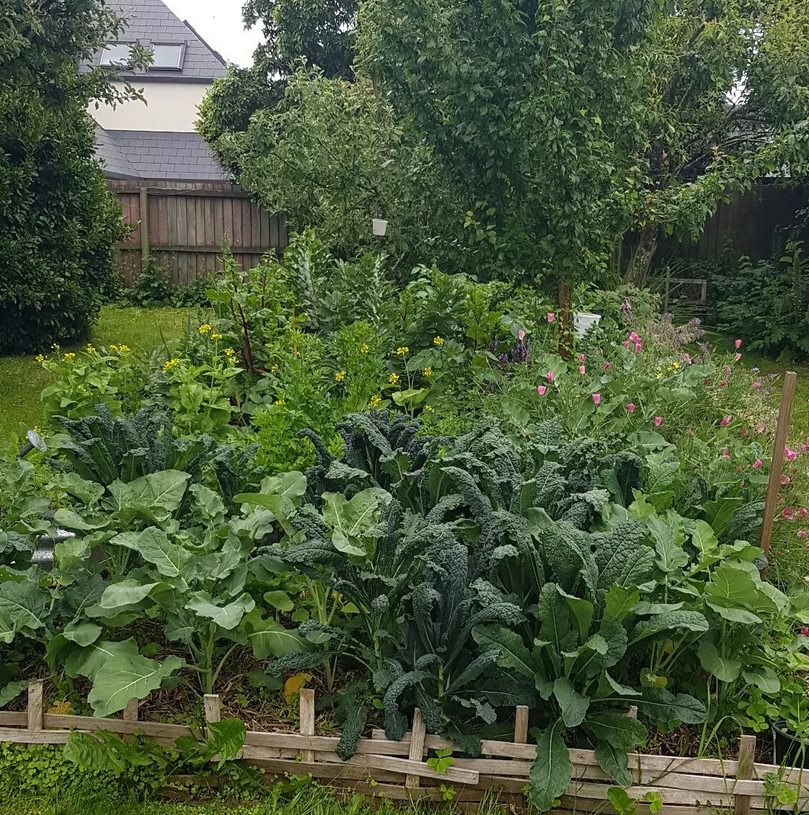
The most recent installment in the podcast series with Tara Brabazon is now available. This was super fun! We discuss the paper I co-wrote with colleagues, published 2023, entitled “Cultivating commoners: Infrastructures and subjectivities for a postcapitalist counter-city”. We discuss the collaboration with Christchurch urban farm Cultivate, the idea of subjectivity and how being outdoors might help shift subjectivities.
Cite the article as: Dombroski, K., Conradson, D., Diprose, G., Healy, S., & Yates, A. (2023). Cultivating commoners: Infrastructures and subjectivities for a postcapitalist counter-city. Cities, 143, 104635. https://doi.org/10.1016/j.cities.2023.104635
Our Marsden team (Reduce, Reuse, Repair) published a new report about how to move up the waste hierarchy. It was authored by Gradon Diprose (Bioeconomy Science Institute) and Dorte Wray (Zero Waste Aotearoa).
Guest post by Dr Gradon Diprose, Bioeconomy Science Institute.
Why we wrote this report
We know there are huge problems with waste. For example, New Zealand produces a lot of waste compared to other OECD countries, and our central and local government’s focus is on managing waste, not preventing it. While the waste hierarchy has been around for years it is still not reflected in many government’s operational policies or actual investment. This is partly because the waste hierarchy conflicts with many countries GDP growth-oriented economic goals, and the vested interests of powerful industries. The key question for us is how to encourage social and political shifts towards waste prevention given these challenges.
For this report, we researched what collective practices help communities and businesses to prevent waste and build the wider social and political support for waste prevention more broadly. We interviewed people from businesses, local government, and non-governmental organisations and civil society groups who work on waste prevention and supplemented this with a literature review. We asked participants what had practically helped them, their businesses, and wider communities shift from waste management to waste prevention. We also asked participants how they did this. For example, what kinds of language they use, and what they invest in and prioritise.
What is in the report (and isn’t)
The report identifies four interconnected collective practices that help build the social and political pressure to make waste prevention a priority.
The report is not about how to manage waste through individual behaviour change. For example, how to recycle better, how to address problem waste streams, or the best waste disposal options.
What we learned through our research
Our participants and the research literature highlight that governments need to set new rules like mandatory product stewardship, extended producer responsibility and right to repair to shift economic systems towards waste prevention. The four interconnected collective practices that help build the social and political pressure for this new legislation are:
Supporting collectives and networks
Investing in place-based initiatives
Using data to demonstrate impact
Using language strategically to frame change
Who is this report for?
We wrote this report for those people and organisations already taking action on waste prevention, and for those who are concerned and want to take action. We also wrote it for funders, public servants and elected officials who might want to support waste prevention and wider systems change but don’t know where to start. The report helps to show what is already in motion and what is working.
What’s next?
We will be running cooperative inquiry groups (a kind of action research approach using focus groups) with New Zealanders who are interested in waste prevention. These groups will explore people’s everyday practical actions and deeper meanings and emotions associated with waste prevention. Shifting towards waste prevention will require significant and deep social changes. These cooperative enquiry groups will explore some of these shifts. Such as how people come to desire consuming less (reduce), how the negotiate their relationships with others in the process.
As part of my Rutherford Transitioning to Caring Economies work I look to take on students doing aligned projects funded by other funders. Heidi McLeod is a PhD student I am co-supervising enrolled at Lincoln University. She is a Food Transitions 2050 scholar, lives in Hawke’s Bay, and has participated in the research postcapitalist possibilities winter school.
Heidi, tell us a bit about yourself and what you are working on.
I am an out and out foodie and I love good food. I am passionate about whole food and food that comes from a quality environment. I aim to live lightly on the earth, well lighter and lighter, and I care about how our world cares for itself and each other. My immersion in Human Geography over the last few years has seen me contemplate the elements of space, place, scale, and flow. These touchstone points have helped me engage with how we live and thrive in the world today, yesterday, and tomorrow. Because I have had a lifetime connected to food, I used my geographic learnings to think about food and our food system – connecting things that I love and have meaning to me. If I can’t feed you, I have failed!
To explore how food is in space, place, scale and flow, I have come to think about production and consumption, the ways in which food is connected across myriad places and flows, and finally settling to think about food for the people of Aotearoa New Zealand. I have been drawn to the discourse around care and ethics, recognising the importance of diversity, surplus, and the need for different political and economic mindsets to provide food to people in a way that does not limit access or cause social and environmental harm. To this end, I have begun a PhD, through the Food Transitions 2050 Joint Postgraduate School, aimed at examining the impact of local food systems and socially and environmentally just food security initiatives. I’m right at the beginning, but have a great team and I can’t wait to get started on my research and see what I can learn to share with Aotearoa New Zealand about our food system.
What are the big transitions you see needing to happening in your area of interest?
I’m really conscious of Aotearoa New Zealand’s colonised trajectory into agriculture, and our position within global systems as a dairy and meat exporter (alongside other smaller but lucrative produce and products) to international markets. My concern is that our national focus appears to be on taking every opportunity to maximise use of our environment to harness export or niche markets for an optimum price. However, at the same time Aotearoa New Zealand, like many other countries, is faced with complex problems of malnutrition, climate change, environmental degradation, and social inequalities which ring the alarm bell of food insecurity. This begs the question, what transitions are required to improve outcomes for Aotearoa New Zealand’s eaters and also many agricultural producers?
This is the intersection with caring economies literature, and more specifically with the oeuvre of Gibson-Graham’s work on diverse economies. It feels to me that our current political and economic structures prioritise policy, regulation, and funding that favours and progresses our agricultural export potential ahead of attending immediate needs of Aotearoa New Zealand’s eaters and smaller producers. The fantastic fact is that we can absolutely do both, it’s not a case of ‘either-or’ but of ‘both-and’. However, in my mind, our structures of political economy need to recognise and embrace diverse and caring economies, pursuing social and environmental justice, not just export drivers. I think there is space for both and we need to transition to a place of enabling these diverse and hopeful possibilities.
What inspires you from the communities you are working with?
I’m not yet researching with communities for my PhD. But, based on research I’ve done in Taranaki and with food system innovators who are reinventing food supply/value chains, I’m inspired by the intuitive knowledge these growers who are working against the grain to produce amazing produce in a way that betters our environment, provides ideal livelihoods, and redistributes value to producers. They all exhibit welcome additional options to our mainstream systems and conveniences. I’m inspired by the way they can give full effect to their ideals be they cultural, environmental, or social. I’m disheartened by the challenges they face, the lack of visibility and appreciation they receive, and the barriers they face as they continue to innovate and experiment with the highest benchmarks of care and ethics. Therefore, I want to utilise my PhD and ongoing research to highlight the value of these caring economies in order to enhance policy, regulation and our lived experiences.
What are some of the challenges in doing a PhD in this area?
He tangata, he tangata, he tangata. There are challenges wherever you look, but with the right people on your waka you can crest any wave.
Heidi is a food systems researcher who is passionate about local food.