The most recent installment in the podcast series with Tara Brabazon is now available. This was super fun! We discuss the paper I co-wrote with colleagues, published 2023, entitled “Cultivating commoners: Infrastructures and subjectivities for a postcapitalist counter-city”. We discuss the collaboration with Christchurch urban farm Cultivate, the idea of subjectivity and how being outdoors might help shift subjectivities.
Cite the article as: Dombroski, K., Conradson, D., Diprose, G., Healy, S., & Yates, A. (2023). Cultivating commoners: Infrastructures and subjectivities for a postcapitalist counter-city. Cities, 143, 104635. https://doi.org/10.1016/j.cities.2023.104635
By Dr Lila Laird, Postdoctoral Researcher, Massey University
What is the project about?
We are embarking on a project that traces how groups of people move up the ‘waste hierarchy’ and how such transformations shape people’s sense of self in relation to waste. This matters because issues like microplastic pollution, environmental contaminant leaching, and dwindling landfill space continue to negatively impact ecosystems and communities. In order for Aotearoa to avoid further waste crises, our use and disposal of material goods must change. Despite warnings and ample evidence, plastic, metal, organic material, food, excrement and building waste continue to grow.
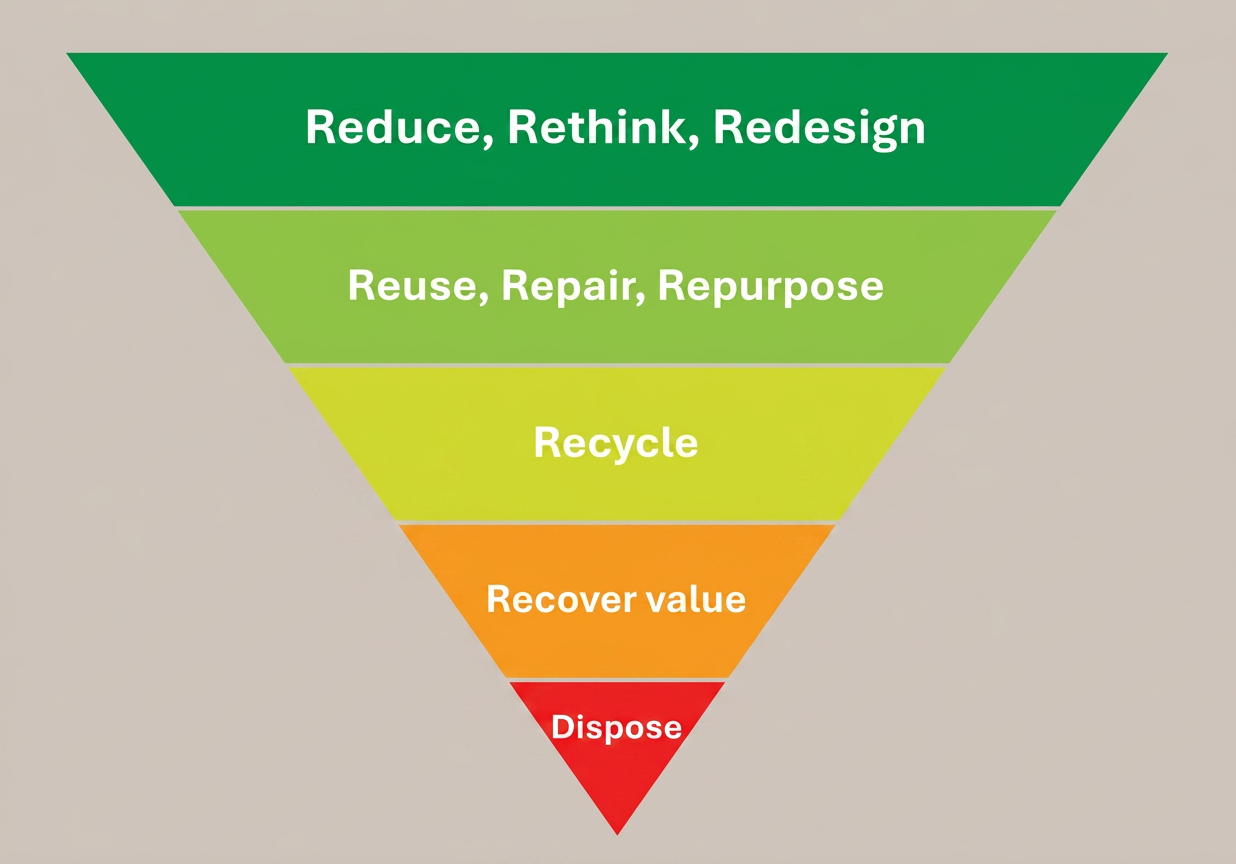
Shifting towards ‘circular economies’ is often proposed to stop such crises and to avoid the linear take-make-dispose model. Instead, a circular economy keeps resources in use for as long as possible, and the waste hierarchy (pictured below) conveys the kinds of actions that are most beneficial in circulating materials for reuse. Near the top of the waste hierarchy includes reduce, reuse and repair, and these are the forms of circular economy we are most interested in investigating.
The Waste Hierarchy — we should be doing more the top and less of the bottom!
Circular economy research often points to high tech advancements, hoping to deal with our waste and also create business value from it. However, these ‘solutions’ do not often lead to less waste! Instead, they often end up adapting to the current flows of waste being produced. Social scientists researching circular economy practices have found that in order to reduce, reuse, and repair materials, large amounts of often invisible or undervalued labour is required.
In simple terms, it takes a fair amount of people-power to wash, sort, clean, store and transport resources for their reuse. Or to undertake research, connect with knowledgeable people, upskill oneself, and foster patience to repair an item to keep it in use. And it takes a significant amount of effort to avoid waste altogether. Therefore, because a circular economy is a matter of who is engaged and what kinds of action they are taking, our research is interested in meeting with people focused on being less wasteful and keeping their items in use.
Waste is a culturally situated concept. Different cultural groups have different norms and taboos with regards to waste, including what is considered necessary waste. Different cultural groups also have different kinds of relationships to land and the ways land is currently used to ‘deal with’ waste. For example, in te ao Māori, understandings of tapu and noa might guide waste disposal in different ways from western norms. All of this difference is an important part of the ways people approach waste, and what moving up the waste hierarchy may look like for them. And these differences provide important insights into the challenges and solutions to current waste crises.
What does the project involve?
We have partnered with three important organisations who help people in Aotearoa to become less wasteful.
Para Kore is a Māori zero-waste organisation. Para Kore educates and advocates from a Māori worldview for zero carbon and zero waste in Māori communities and beyond. They run sustainability programs across Aotearoa, working with marae, iwi, early childhood centres, churches, community organisations, businesses and more.
Repair Network Aotearoa is a charitable trust that works with repair cafes and similar projects like tool libraries and maker spaces across Aotearoa, advocating for the right to repair legislation in Aotearoa.
Zero Waste Aotearoa is an organisation that supports over 150 groups across Aotearoa that are working towards zero waste in their local community.
To explore our interests in waste and identity, we are undertaking field work with our research partners and collectives engaged in practices at the top of the waste hierarchy. We will also be undertaking cooperative inquiry groups that enable us to bring together like-minded people to explore their practices relating to waste and to items that could become waste, their concerns and feelings surrounding waste, and what they would like to change in relation to waste practices for themselves and their wider collectives.
Who is this research for?
By the end of the project, we will have co-created an action plan with our community partners that identifies how government and community can invest in social innovations needed for circular economies in Aotearoa. The action plan will support practices at the top of the waste hierarchy and will be directed at waste decision-makers in community and government. As many people grapple with the waste that enters their households, workplaces, marae, community centres and the nature surrounding them, we hope that our action plan can help to bring us one step closer to a waste-less Aotearoa.
What’s next?
We are currently connecting with collectives on the ground who are engaged in actions of reduce, reuse and repair. This includes repair cafes, textile recovery groups, resourceful-craft organizations, makerspaces, tool libraries, community composters, and more. We look forward to keeping you informed of what we find out in the process!
You can find out more about who is involved in the project here:
This is a plain language summary for the article Expanding Circular Economies Through Transformative Community Investment authored by Gradon Diprose, Kelly Dombroski, Dean Stronge and Alison Greenaway. There are 50 free copies available from here.
This article is all about how we can make our economies more circular and sustainable. It’s not just about fancy new tech or being super efficient with resources. It’s also about social innovation and making sure everyone benefits.
Key Points:
Three Cool Examples: The article looks at three different enterprises in New Zealand – one in transport, one in energy, and one in food. There’s a regular business, a social enterprise, and a charity. Each one is doing awesome stuff with their profits to help people and the planet.
Reinvesting Surplus: Instead of just pocketing the profits, these enterprises are putting their extra money back into circular economy innovation. They’re supporting social equity and helping to build a circular economy where waste is designed out. This is NOT about designing new products for consumption, but about innovation in services: car-sharing, energy hardship programmes, and vegetable distribution.
Social Innovation: These businesses are coming up with creative ways to use their surplus. They’re challenging the old-school, take-make-waste model and showing that we can do things differently. The innovation is in the organisation and logistics, rather than new materials or tech.
Equitable Practices: They’re all about refusing, reducing, re-using, sharing, and repairing. It’s not just about recycling – it’s about changing how we think and act to create a fairer, less wasteful world. The organisations have an eye to equity and justice, making sure that a wider range of people can be empower to use more ‘circular’ and low-waste services.
By documenting what’s happening in these examples, the article shows how enterprises can use surplus in smarter, fairer ways to support the transition to circular economies. This article contributes to the goals of moving towards a caring, postcapitalist economy — but uses contemporary business language like ‘innovation’ and ‘investment’ in order to reframe these ideas for people and planet!🌱
We wrote this guide because we could feel something stirring across the region.
Recently I was part of a project documenting awesome projects in the Greater Wellington Region. In our work as researchers, community collaborators, planners, and advocates, we kept coming across people doing the quiet, determined, and deeply hopeful work of transition. These included composters and kai growers, local energy innovators, housing cooperatives, council staffers working behind the scenes, artists hosting place-based experiments, iwi-led projects regenerating whenua. As someone born in Wellington and who grew up in Wairarapa, I was really keen to connect with projects in this region but also to connect them with each other!
Often, these efforts were siloed or invisible to each other. But taken together, they point to something larger: an emerging transition infrastructure already in motion. Transitions in Action: An Urban and Regional Transitions Guide for Te Upoko o te Ika / Wellington is our attempt to document, honour, and connect these efforts.
What the guide is (and isn’t)
It’s not a plan. It’s not a blueprint. We explored a few different ideas for titles (I suggested ‘look book’), but it was Amanda that came up with the idea of a ‘field guide’.
So it’s a field guide—something that invites attention, orientation, and learning. It draws on interviews, workshops, and mapping work to identify over 50 projects across six transition domains: housing, energy, mobility, ecosystems, economy, and community.
To me, what is important is that these are not hypothetical futures—they’re already underway. And they’re reshaping our shared sense of what’s possible here.
What we’ve learned
Writing this guide affirmed a few things we suspected, and clarified many things we hadn’t yet articulated. A few key insights:
Transitions are already happening, but they’re uneven, precarious, and sometimes invisible to themselves.
Place matters. Transition in Wellington looks different than in other regions—it’s shaped by wind, faultlines, iwi relationships, governance structures, harbour edges, and long-standing networks of resistance and repair.
Community and institutional work are entangled. The most promising initiatives weren’t either grassroots or top-down—they blurred those lines.
Transitions need time and infrastructure. Many of these projects operate on goodwill and temporary resourcefulness. Without scaffolding—funding, policy shifts, relational infrastructure—they risk burning out or being co-opted.
Who we wrote it for
We wrote this guide for people already doing the work, to help them find each other. It was so awesome to see a range of the people who feature in the book turn up to the launches and meet each other!
We also wrote it for funders, public servants, and elected officials—those who say they want climate action or community wellbeing, but often don’t know where to start. The guide shows what’s already in motion, what’s needed, and where policy or funding could shift to support grassroots capacity without overriding it. We have had such a great response from local and central government — with Masterton councillor Stella Lennox, Wellington City Councillor Yadana Saw, MPs Celia Wade-Brown and Tamatha Paul appearing at our two launches!
Finally, we wrote it for ourselves. To better understand the ecology of transition in our home region. To see the patterns, the synergies, the tensions, and the possibilities.
What’s next?
Our hope is that the guide becomes a resource for conversation and connection. That it helps to legitimise and amplify the work already being done. And that it invites deeper reflection on what kinds of transitions we’re part of—and for whom.
We’re already hearing from local councils, community groups, and educators who want to use it in their work. And we’re in ongoing conversations with collaborators about how this guide might seed similar efforts in other regions.
With my colleagues David Conradson, Stephen Healy, Gradon Diprose and Amanda Yates, I recently published an article for a special issue of the journal Cities. Here’s a plain language summary!
In the aftermath of devastating earthquakes in Christchurch, New Zealand gaps in the landscape emerged, and some new ideas and possibilities were able to take root and eventually thrive. Our article pulls together some of these interesting alternatives and uses the idea of ‘counter-city’ to describe what’s going on.
What is a counter-city?
When we think about cities, we often think of those in charge making decisions, sometimes influenced by the interests of big businesses and industriesto maintain a preference for capitalist modes of competitive development. But we might also think of the ‘counter-city’, thinking of everyday people, artists, Indigenous leaders, and communities who maintain more collaborative modes of urban change.
The counter-city isn’t a fully formed alternative to the regular city, and it doesn’t completely get rid of the business-as-usual ways of doing things. Instead, it’s a mix of innovative changes that invite us to think about a different kind of city. It’s a city where we explore new possibilities beyond the usual, always-capitalist city.
In our article, we discuss how changes and experiments in Christchurch, often led by community groups, transformed the city into a place where people could do things differently. This counter-city is a place where “hidden but now emerging ideas and ways of doing things” have turned into a “different way of doing things.”
If concrete is the usual infrastructure for the business-as-usual city, what is the infrastructure of the counter-city?
The counter-city is made up of structures, or “infrastructures,” that provide the foundation for how people organize and interact in their community. These infrastructures were shaped by the earthquakes and the changes they brought.
If we think of the counter-city within Christchurch, we think of the “commons” and “commoning” practices present, where people came together to share resources and spaces. While these were often temporary, they aimed to shift the management of resources and spaces from private responsibility to shared responsibility. They were led by the community, with people working together for the greater good. We can think of these as “social infrastructure”, relatively stable structures that provide a foundation for people in the counter-city.
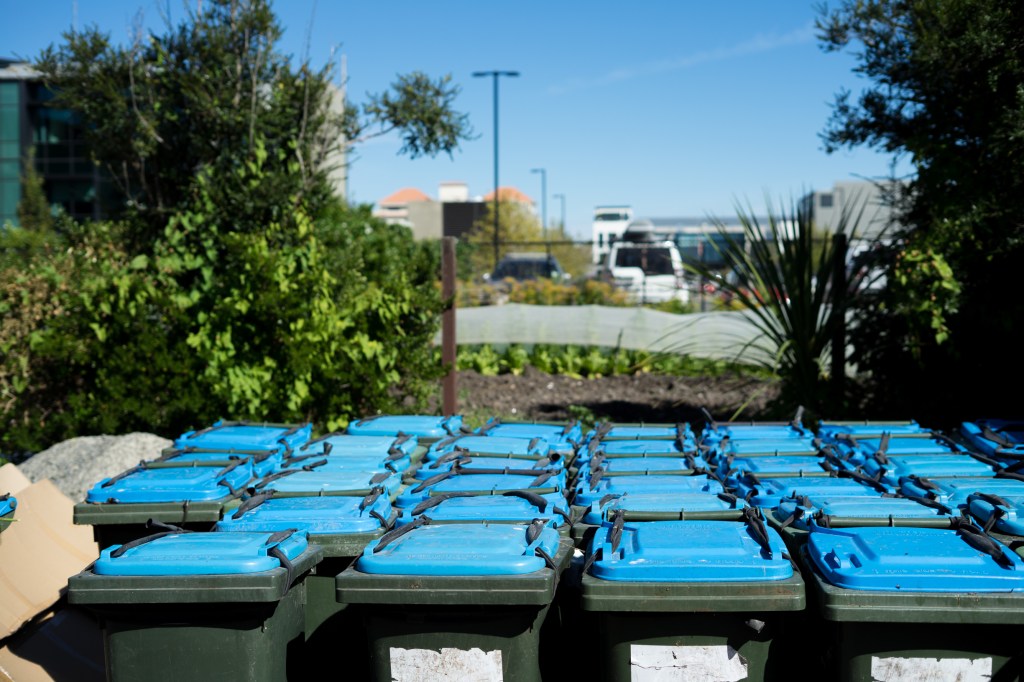
One such commons/infrastructure was an urban farm run by a social enterprise. In our work interviewing young people and staff on this urban farm, we found that in this counter-city, people also started to see themselves differently even if their commoning activities were temporary. They moved away from the idea of “everyone for themselves” and embraced a sense of caring for each other and the community. This way of thinking and being is what we call a “postcapitalist” subjectivity. In simple terms, it’s like moving from just thinking about money and profit to thinking about taking care of each other and the environment.
In the postcapitalist counter-city we are trying to describe, we called these people “commoners.” Commoners are individuals actively involved in caring for shared spaces, knowledge, or resources. They are at the heart of the counter-city’s transformation.
How do these infrastructures relate to people and the way they understand themselves?
In our article, we look at an urban farm in Christchurch. We explore how it became a “commons” where people and the environment came together as a kind of infrastructure of care. We’ll see how this farm changed young people’s way of thinking and acting, making them more focused on caring for the community and the environment. They spoke of a shift in their relationship with the world around them, encompassing everything from the land and garden to the larger ecological systems, the food system, the community, and their fellow workers. These transformations were collective, bearing a striking resemblance to the concept of “homines curans” – the collective caring subject – rather than the individualist, work-focused “homo economicus.” Another way to say this is that they became something more like “commoners” — people who care for commons together.
This journey through this example can help us understand what a counter-city might mean, and how the shift in how people see themselves and their community can shape the future of cities.
Drawing from postcapitalist theory, we explored the dynamics of commons as infrastructure, commoning, and subjectivity in this example. Encounters with more-than-human infrastucture/commons created conditions for collective caring urban subjects to emerge. The commons, often overlooked, can be viewed as an infrastructure of care for the counter-city. It sets the stage for the growth and flourishing of collective caring subjectivities.
Many thanks to ChatGPT, who helped to simplify some of our language in this summary.
The reference for the article: Dombroski, K., Conradson, D., Diprose, G., Healy, S., & Yates, A. (2023). Cultivating commoners: Infrastructures and subjectivities for a postcapitalist counter-city. Cities, 143, 104635. https://doi.org/10.1016/j.cities.2023.104635
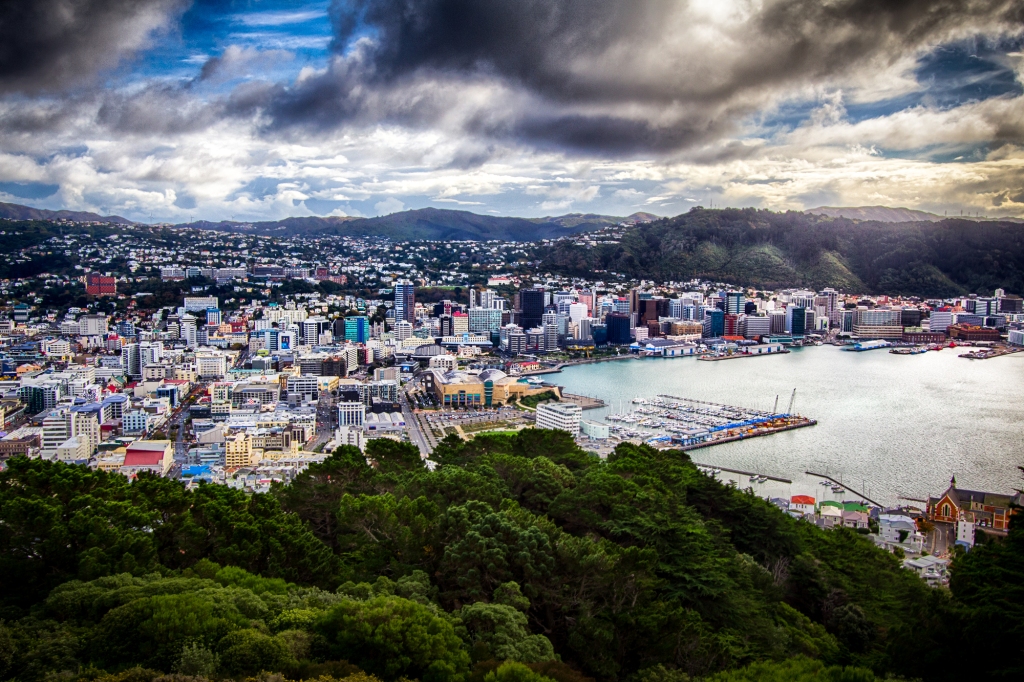
How do cities transition to places of wellbeing for both humans and the environment? This is a key question in our book-in-progress “A Fieldguide to Wellington Transitions”. Amanda Yates, Thomas Nash, Gradon Diprose and myself are interviewing in Wellington this week to aquaint ourselves to the details of transformative transition projects already underway in Wellington.
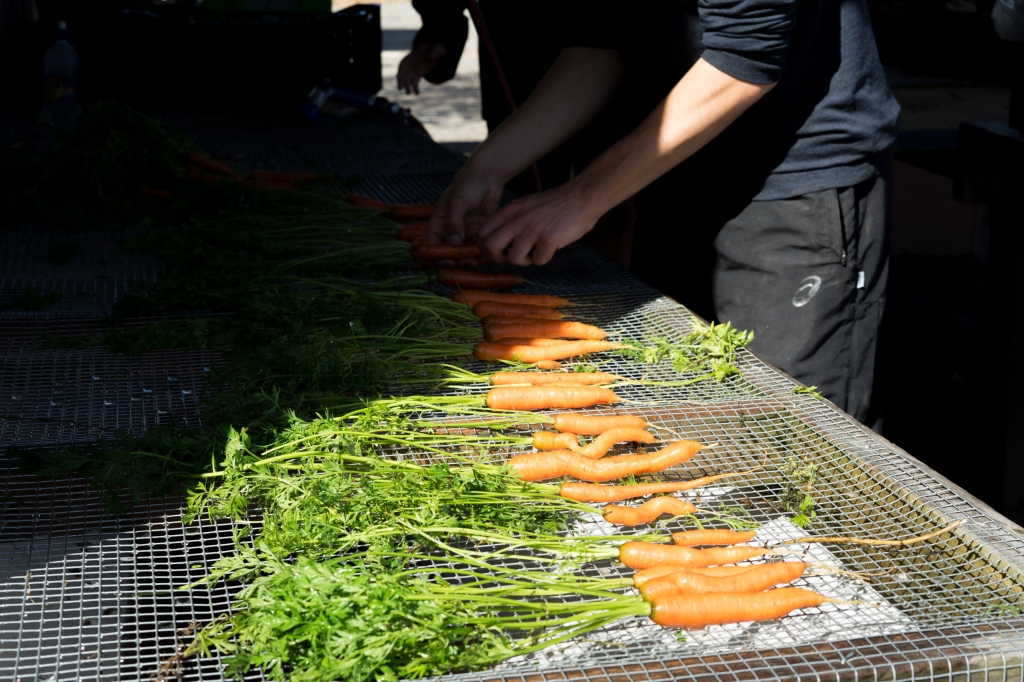
People harvesting green leafy vegetables from damp, dark soil
People in Aotearoa New Zealand spend more and more time indoors, and less time connecting with te taiao than our ancestors did. For many of us, we don’t think of ourselves as connected to the land in a practical way — although we may feel more abstractly connected to places and spaces. How do we build relationships with the land and places that are intimate and knowing? Why should we?
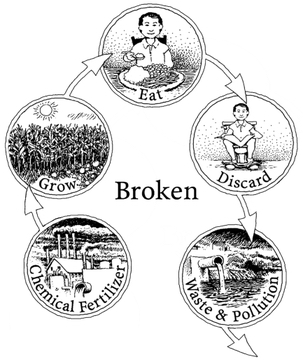
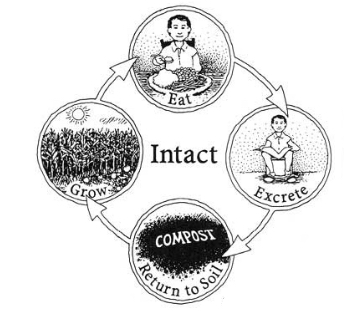
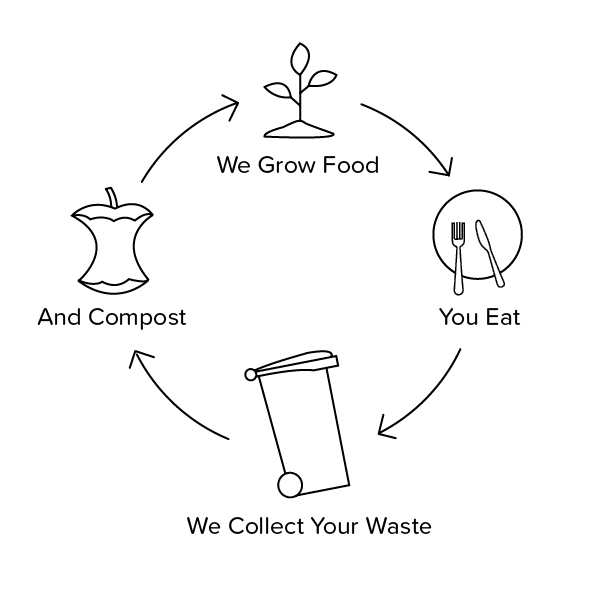
Scholars have talked about the idea of ‘metabolic rift’ — the disconnect that many urban people have when it comes to the metabolic cycle. Our food is produced far away from us, and our food scraps are taken away from us to landfill or other (hopefully better) places. Even our shit is taken away through pipes to who knows where. This mean we aren’t really viscerally connected to the cycles of production, consumption and decomposition that keep us all alive. The metabolic rift can be bigger than this too: in Aotearoa New Zealand our soils produce foods for export and the waste from those foods is handled elsewhere in the world — but we then have to import fertilisers to keep that system going! The ‘circle’ of the metabolism is broken.
Jenkins, J. (2005). The humanure handbook: a guide. Grove City: Joseph Jenkins.Broken and intact nutrient cycles
This is a big problem for our economies and our whenua. When there is no circularity to our production, consumption and decomposition, we are disconnected from the effects of our actions on the land. It’s also a big problem for our understanding of ourselves as economic and environmental actors. How can we see ourselves as relating intimately to the environment if we are encouraged to see ourselves as part of a massive import export global system machine?
When there is no circularity to our production, consumption and decomposition, we are disconnected from the effects of our actions on the land.
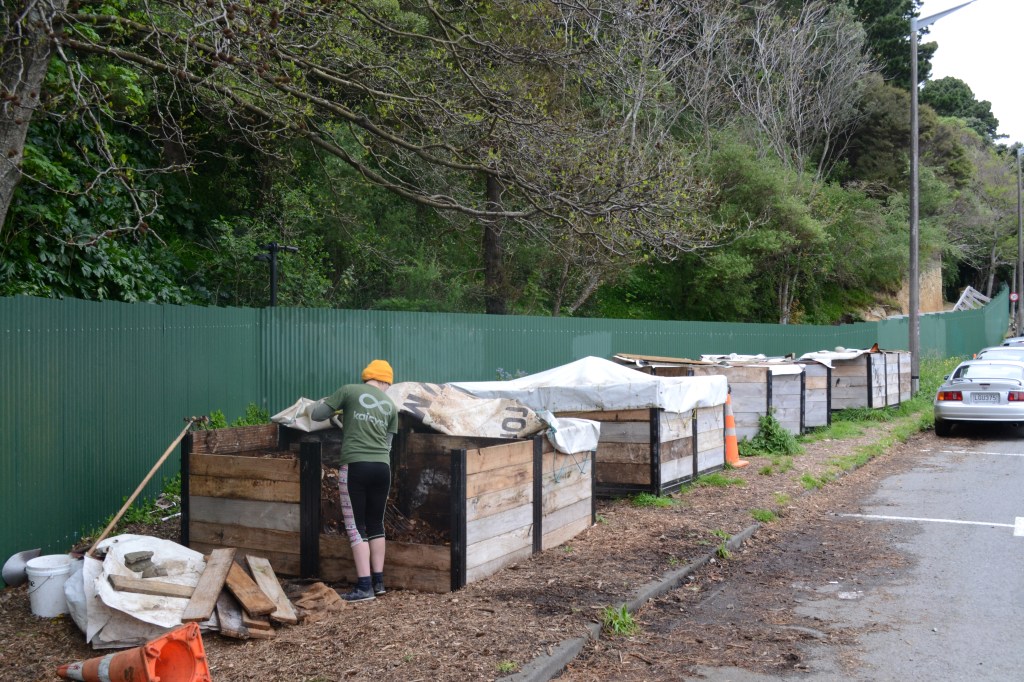
In my work, I’m interested in the relational side of economies, how we understand ourselves as economic and environmental beings, and how that affects the way we act in the world. I have had the privilege to study an urban farm where young people and others are invited into a relationship with the soil through practices of composting and gardening. They are invited to close the metabolic rift quite literally by eating and even shitting on site in a composting toilet! But they are also invited to close the metabolic rift by coming into an attentive and observant relationship with te taiao, the natural world.
Reconnecting with the soil in this way creates space for reconnecting with oneself as a different kind of economic actor. It invites us to understand ourselves and our role in the economy as relational and as more active producer and activist, and less of a passive consumer. Sasha Goburdhone and myself wrote a commentary on this for New Zealand Geographer, which just came out this week. I invite you to check it out, and leave a comment to get the conversation going. What do you think about the idea of metabolic rift? Is it a useful analysis?