Category: Marsden Circular Economies Project

  • How to move up the waste hierarchy

    How to move up the waste hierarchy

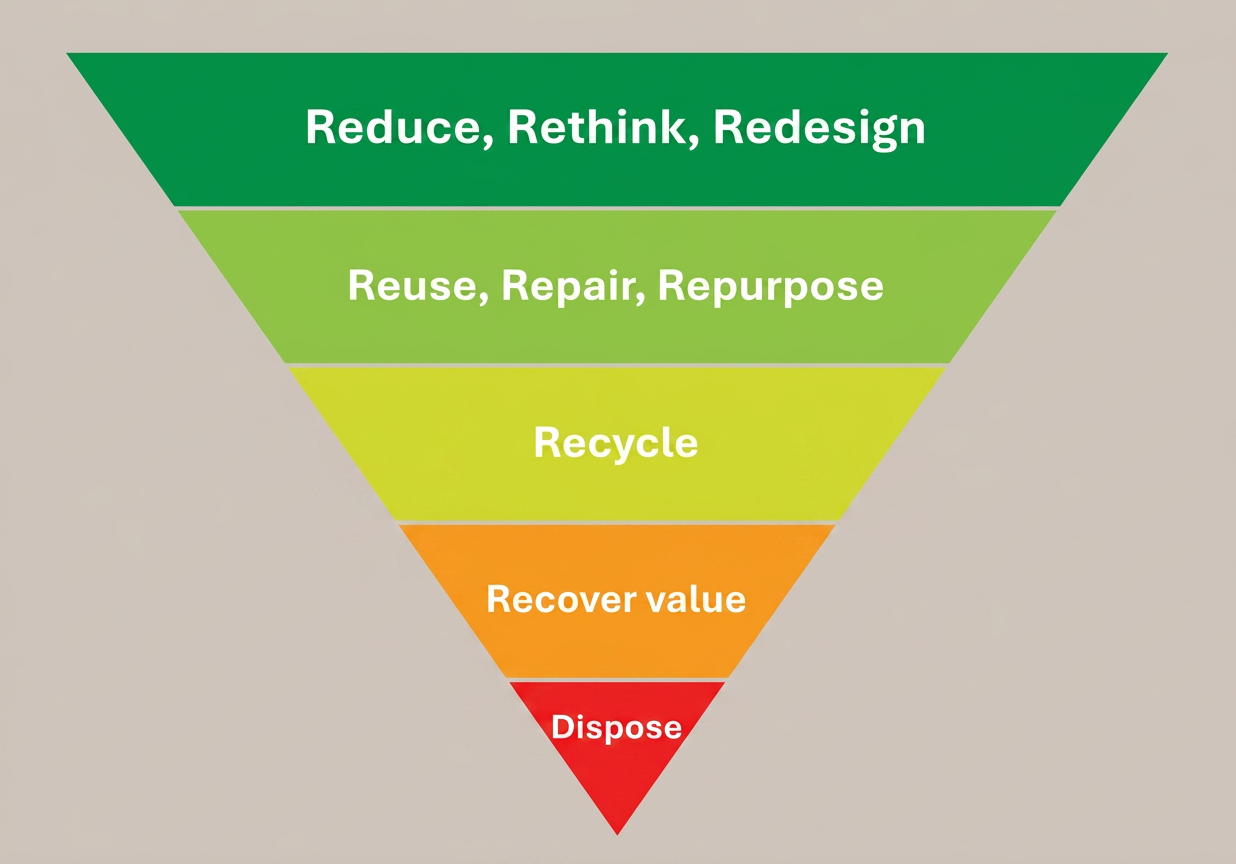
    Our Marsden team (Reduce, Reuse, Repair) published a new report about how to move up the waste hierarchy. It was authored by Gradon Diprose (Bioeconomy Science Institute) and Dorte Wray (Zero Waste Aotearoa).

    Guest post by Dr Gradon Diprose, Bioeconomy Science Institute.

    Why we wrote this report

    We know there are huge problems with waste. For example, New Zealand produces a lot of waste compared to other OECD countries, and our central and local government’s focus is on managing waste, not preventing it. While the waste hierarchy has been around for years it is still not reflected in many government’s operational policies or actual investment. This is partly because the waste hierarchy conflicts with many countries GDP growth-oriented economic goals, and the vested interests of powerful industries. The key question for us is how to encourage social and political shifts towards waste prevention given these challenges.

    For this report, we researched what collective practices help communities and businesses to prevent waste and build the wider social and political support for waste prevention more broadly. We interviewed people from businesses, local government, and non-governmental organisations and civil society groups who work on waste prevention and supplemented this with a literature review. We asked participants what had practically helped them, their businesses, and wider communities shift from waste management to waste prevention. We also asked participants how they did this. For example, what kinds of language they use, and what they invest in and prioritise.

    What is in the report (and isn’t)

    The report identifies four interconnected collective practices that help build the social and political pressure to make waste prevention a priority.

    The report is not about how to manage waste through individual behaviour change. For example, how to recycle better, how to address problem waste streams, or the best waste disposal options.  

    What we learned through our research

    Our participants and the research literature highlight that governments need to set new rules like mandatory product stewardship, extended producer responsibility and right to repair to shift economic systems towards waste prevention. The four interconnected collective practices that help build the social and political pressure for this new legislation are:

    • Supporting collectives and networks
    • Investing in place-based initiatives
    • Using data to demonstrate impact
    • Using language strategically to frame change

    Who is this report for?

    We wrote this report for those people and organisations already taking action on waste prevention, and for those who are concerned and want to take action. We also wrote it for funders, public servants and elected officials who might want to support waste prevention and wider systems change but don’t know where to start. The report helps to show what is already in motion and what is working. 

    What’s next?

    We will be running cooperative inquiry groups (a kind of action research approach using focus groups) with New Zealanders who are interested in waste prevention. These groups will explore people’s everyday practical actions and deeper meanings and emotions associated with waste prevention. Shifting towards waste prevention will require significant and deep social changes. These cooperative enquiry groups will explore some of these shifts. Such as how people come to desire consuming less (reduce), how the negotiate their relationships with others in the process.

    You can read and download the full report below:
  • Introducing a new project: Reduce, Reuse, Repair: Emerging waste subjectivities for postcapitalist economies

    Introducing a new project: Reduce, Reuse, Repair: Emerging waste subjectivities for postcapitalist economies

    By Dr Lila Laird, Postdoctoral Researcher, Massey University

    What is the project about?

    We are embarking on a project that traces how groups of people move up the ‘waste hierarchy’ and how such transformations shape people’s sense of self in relation to waste. This matters because issues like microplastic pollution, environmental contaminant leaching, and dwindling landfill space continue to negatively impact ecosystems and communities. In order for Aotearoa to avoid further waste crises, our use and disposal of material goods must change. Despite warnings and ample evidence, plastic, metal, organic material, food, excrement and building waste continue to grow.

    The Waste Hierarchy — we should be doing more the top and less of the bottom!

    Circular economy research often points to high tech advancements, hoping to deal with our waste and also create business value from it. However, these ‘solutions’ do not often lead to less waste! Instead, they often end up adapting to the current flows of waste being produced. Social scientists researching circular economy practices have found that in order to reduce, reuse, and repair materials, large amounts of often invisible or undervalued labour is required.

    In simple terms, it takes a fair amount of people-power to wash, sort, clean, store and transport resources for their reuse. Or to undertake research, connect with knowledgeable people, upskill oneself, and foster patience to repair an item to keep it in use. And it takes a significant amount of effort to avoid waste altogether. Therefore, because a circular economy is a matter of who is engaged and what kinds of action they are taking, our research is interested in meeting with people focused on being less wasteful and keeping their items in use.

    Waste  is a culturally situated concept. Different cultural groups have different norms and taboos with regards to waste, including what is considered necessary waste. Different cultural groups also have different kinds of relationships to land and the ways land is currently used to ‘deal with’ waste. For example, in te ao Māori, understandings of tapu and noa might guide waste disposal in different ways from western norms. All of this difference is an important part of the ways people approach waste, and what moving up the waste hierarchy may look like for them. And these differences provide important insights into the challenges and solutions to current waste crises.

    What does the project involve?

    We have partnered with three important organisations who help people in Aotearoa to become less wasteful.

    Para Kore is a Māori zero-waste organisation. Para Kore educates and advocates from a Māori worldview for zero carbon and zero waste in Māori communities and beyond. They run sustainability programs across Aotearoa, working with marae, iwi, early childhood centres, churches, community organisations, businesses and more.

    Repair Network Aotearoa is a charitable trust that works with repair cafes and similar projects like tool libraries and maker spaces across Aotearoa, advocating for the right to repair legislation in Aotearoa.

    Zero Waste Aotearoa is  an organisation that supports over 150 groups across Aotearoa that are working towards zero waste in their local community.

    To explore our interests in waste and identity, we are undertaking field work with our research partners and collectives engaged in practices at the top of the waste hierarchy. We will also be undertaking cooperative inquiry groups that enable us to bring together like-minded people to explore their practices relating to waste and to items that could become waste, their concerns and feelings surrounding waste,  and what they would like to change in relation to waste practices for themselves and their wider collectives.

    Who is this research for?

    By the end of the project, we will have co-created an action plan with our community partners that identifies how government and community can invest in social innovations needed for circular economies in Aotearoa. The action plan will support practices at the top of the waste hierarchy and will be directed at waste decision-makers in community and government. As many people grapple with the waste that enters their households, workplaces, marae, community centres and the nature surrounding them, we hope that our action plan can help to bring us one step closer to a waste-less Aotearoa.

    What’s next?

    We are currently connecting with collectives on the ground who are engaged in actions of reduce, reuse and repair. This includes repair cafes, textile recovery groups, resourceful-craft organizations, makerspaces, tool libraries, community composters, and more. We look forward to keeping you informed of what we find out in the process!

    You can find out more about who is involved in the project here:

    Gradon Diprose | Kelly Dombroski | Lila Laird | Matthew Scobie