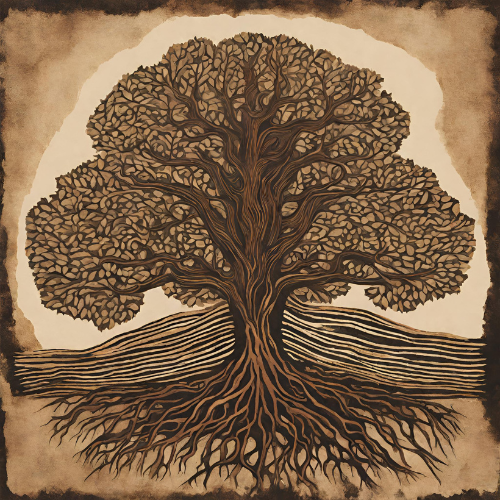

We wrote this guide because we could feel something stirring across the region.
Recently I was part of a project documenting awesome projects in the Greater Wellington Region. In our work as researchers, community collaborators, planners, and advocates, we kept coming across people doing the quiet, determined, and deeply hopeful work of transition. These included composters and kai growers, local energy innovators, housing cooperatives, council staffers working behind the scenes, artists hosting place-based experiments, iwi-led projects regenerating whenua. As someone born in Wellington and who grew up in Wairarapa, I was really keen to connect with projects in this region but also to connect them with each other!
Often, these efforts were siloed or invisible to each other. But taken together, they point to something larger: an emerging transition infrastructure already in motion. Transitions in Action: An Urban and Regional Transitions Guide for Te Upoko o te Ika / Wellington is our attempt to document, honour, and connect these efforts.
What the guide is (and isn’t)
It’s not a plan. It’s not a blueprint. We explored a few different ideas for titles (I suggested ‘look book’), but it was Amanda that came up with the idea of a ‘field guide’.
So it’s a field guide—something that invites attention, orientation, and learning. It draws on interviews, workshops, and mapping work to identify over 50 projects across six transition domains: housing, energy, mobility, ecosystems, economy, and community.
To me, what is important is that these are not hypothetical futures—they’re already underway. And they’re reshaping our shared sense of what’s possible here.
What we’ve learned
Writing this guide affirmed a few things we suspected, and clarified many things we hadn’t yet articulated. A few key insights:
- Transitions are already happening, but they’re uneven, precarious, and sometimes invisible to themselves.
- Place matters. Transition in Wellington looks different than in other regions—it’s shaped by wind, faultlines, iwi relationships, governance structures, harbour edges, and long-standing networks of resistance and repair.
- Community and institutional work are entangled. The most promising initiatives weren’t either grassroots or top-down—they blurred those lines.
- Transitions need time and infrastructure. Many of these projects operate on goodwill and temporary resourcefulness. Without scaffolding—funding, policy shifts, relational infrastructure—they risk burning out or being co-opted.
Who we wrote it for
We wrote this guide for people already doing the work, to help them find each other. It was so awesome to see a range of the people who feature in the book turn up to the launches and meet each other!
We also wrote it for funders, public servants, and elected officials—those who say they want climate action or community wellbeing, but often don’t know where to start. The guide shows what’s already in motion, what’s needed, and where policy or funding could shift to support grassroots capacity without overriding it. We have had such a great response from local and central government — with Masterton councillor Stella Lennox, Wellington City Councillor Yadana Saw, MPs Celia Wade-Brown and Tamatha Paul appearing at our two launches!
Finally, we wrote it for ourselves. To better understand the ecology of transition in our home region. To see the patterns, the synergies, the tensions, and the possibilities.
What’s next?
Our hope is that the guide becomes a resource for conversation and connection. That it helps to legitimise and amplify the work already being done. And that it invites deeper reflection on what kinds of transitions we’re part of—and for whom.
We’re already hearing from local councils, community groups, and educators who want to use it in their work. And we’re in ongoing conversations with collaborators about how this guide might seed similar efforts in other regions.
You can download the full guide here:
📘 Transitions in Action (PDF)
You can find out more about the authors here:
Amanda Yates | Gradon Diprose | Kelly Dombroski | Thomas Nash
The book was launched in Wellington in March and in Wairarapa in May


 Researching Postcapitalist Possibilities
Leave a comment