
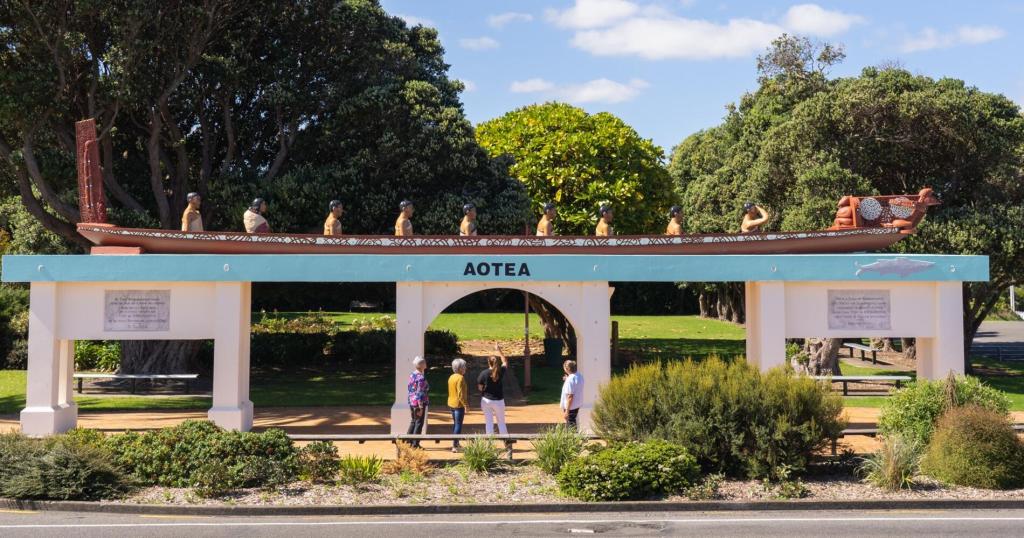
Economic subjectivities in Pātea are not about catching up with capitalist norms but about sustaining inclusive, diverse economies rooted in cultural values and local agency. The town’s identity and resilience challenge dominant narratives of decline.
Ben Lilly researched Pātea for his Master’s of Arts in Geography at Massey University in 2024. Over the last year, he has been working on turning his thesis findings into an article for New Zealand Geographer. This week it was published — you can read it here.
Ben interviewed community leaders in Pātea showing them the results of a media analysis he had conducted and getting their thoughts on the way their town was represented. He also explored a range of ‘more-than-capitalist’ cultural and care practices that had enabled Pātea’s ongoing survivance. Many of us have seen this showcased in one of the nation’s informal anthems — the hit song “Poi E” released by Pātea Māori club in the 1980s.

Ben argues that when we label small towns as ‘left behind’, we buy into a linear trajectory of capitalist economic development where local autonomy and values are minimized. He suggests we shift to the language of ‘left out’, to highlight that the issue at hand is exclusion from decision-making rather than a failure for small towns to ‘keep up’. He provides examples of ways that Pātea residents have emphasized economic self-determination and autonomy after previous encounters with paternalistic industry relationships.
Ben Lilly is PhD candidate at Waikato University. He is the co-chair of the Early Career Research Network of the New Zealand Geographical Society, and is a member of the Community Economies Research Network.


 Researching Postcapitalist Possibilities
Leave a comment